People know how to enter.
Expectations, tone, and first choices land early, so new players can stop bracing and start playing.
I run tabletop games that lower the social friction, make complex worlds playable, and give stores or private groups a host they can trust with the room.

Beginner-friendly Daggerheart, Tuesday, July 7, 2026, 5:00-9:00 PM at Mox Boarding House Chandler. Premade heroes provided, 5 seats max.
Expectations, tone, and first choices land early, so new players can stop bracing and start playing.
Pacing, safety, rules help, and spotlight sharing stay handled while the story keeps moving.
Choices leave marks: factions react, relationships change, and the next session has memory.
Cards, towers, maps, and visible pressure turn big ideas into table objects players understand fast.
The job is not just lore. It is welcome, pace, clarity, trust, recovery, and payoff. I design the room so people can relax into the story.
Players get enough structure to feel safe, then enough space to surprise the table.
Deep settings become playable through clear factions, visible stakes, and choices people remember.
Custom mechanics do their job quietly: they create pressure, reveal tradeoffs, and keep the scene moving.
Prepped, warm, adaptable, and focused on making the table easy for organizers and players.
I run games for people who want high adventure without social friction. The table gets a strong premise, a clean first step, and room for players to push the story somewhere I could not have planned alone.
My style is collaborative, flexible, and homebrew-friendly. I like big worlds, but I care more about whether players can use them: a faction they understand, a choice with teeth, a rule that creates pressure, or a joke that helps the room relax.
Expect rich roleplay, player-driven consequences, table safety, strange systems, and a host who pays attention to pacing, comfort, and the people behind the characters.
A good GM lowers buyer risk. People need to know the event will start cleanly, include newcomers, and leave the group wanting another session.
Beginner nights, organized play, and special events that need a host who can represent the space well.
First-timers and veterans can share the same table without one side feeling lost or slowed down.
One-shots with a strong premise, clean onboarding, and enough texture to feel bigger than a demo.
Each one shows a different kind of fun: long-game consequence, bright table pressure, cinematic mission play, and custom systems players can actually enter.

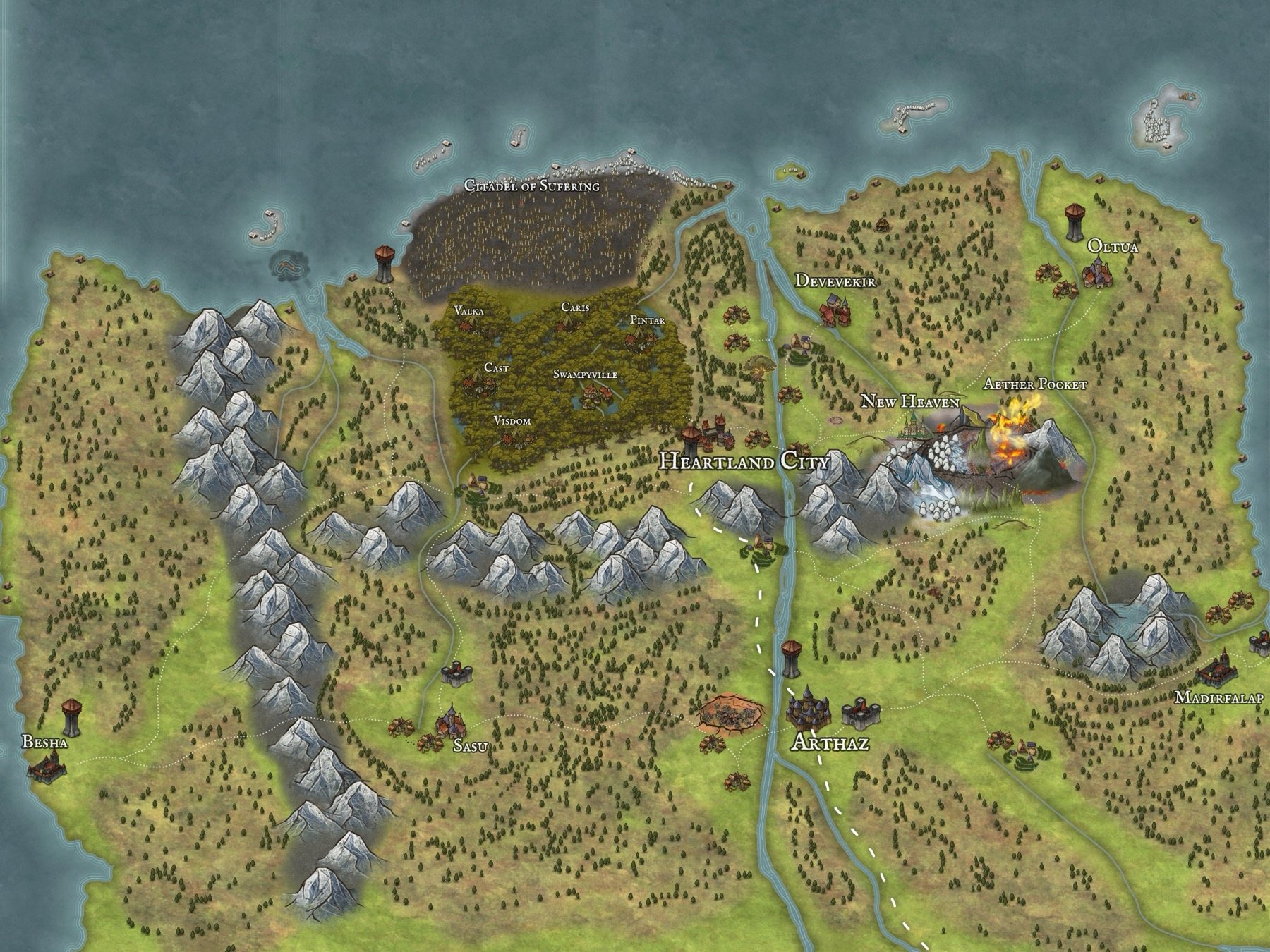
A long-running fantasy campaign about nobodies becoming dangerous enough for the world to notice. The value is continuity: factions move, consequences echo, and players can still find the thread.
At the table: Deep lore gets turned into choices players can actually use.
Explore more
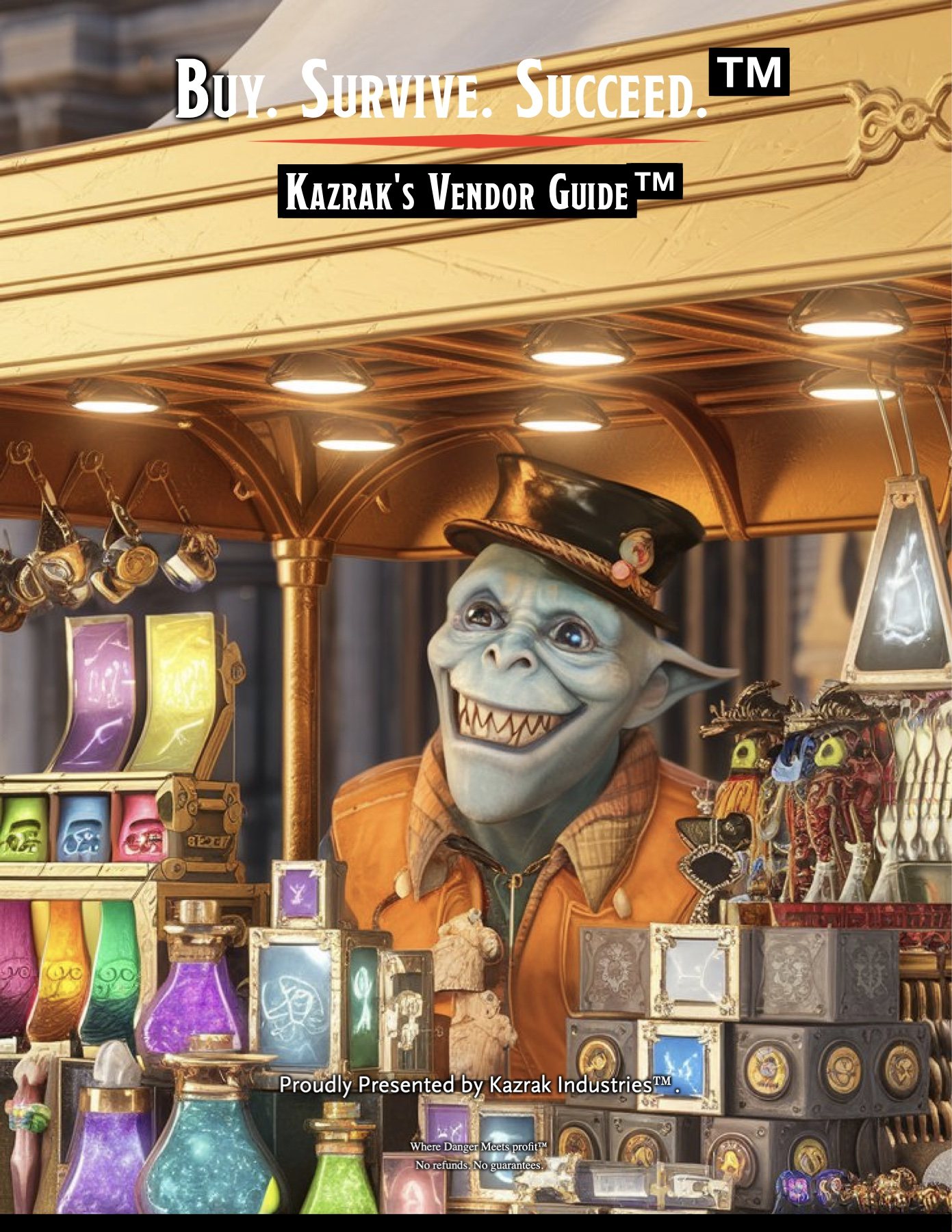
A fantasy workplace hazard disguised as a team-building opportunity. The Jenga tower turns risk into a shared physical joke: HR would call it morale. The table knows better.
At the table: The joke lands because the mechanic is visible, physical, and easy to teach.
Explore more
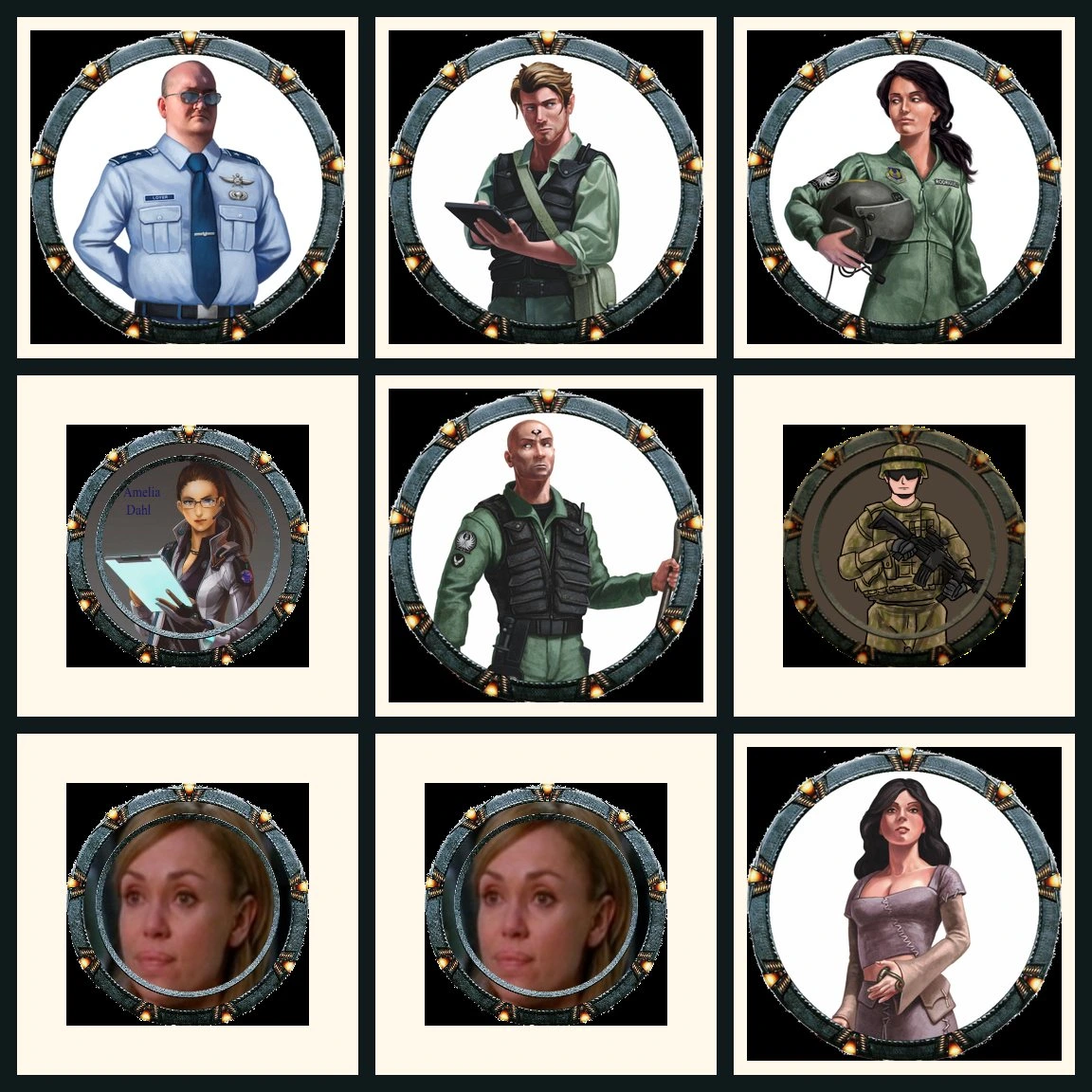
A mission-driven sci-fi campaign built around briefings, objectives, maps, role support, and episode pacing. It proves a different kind of table craft: fast orientation inside a big premise.
At the table: Players get a clear mission frame, a shared team identity, and concrete tools for the scene.
Explore more
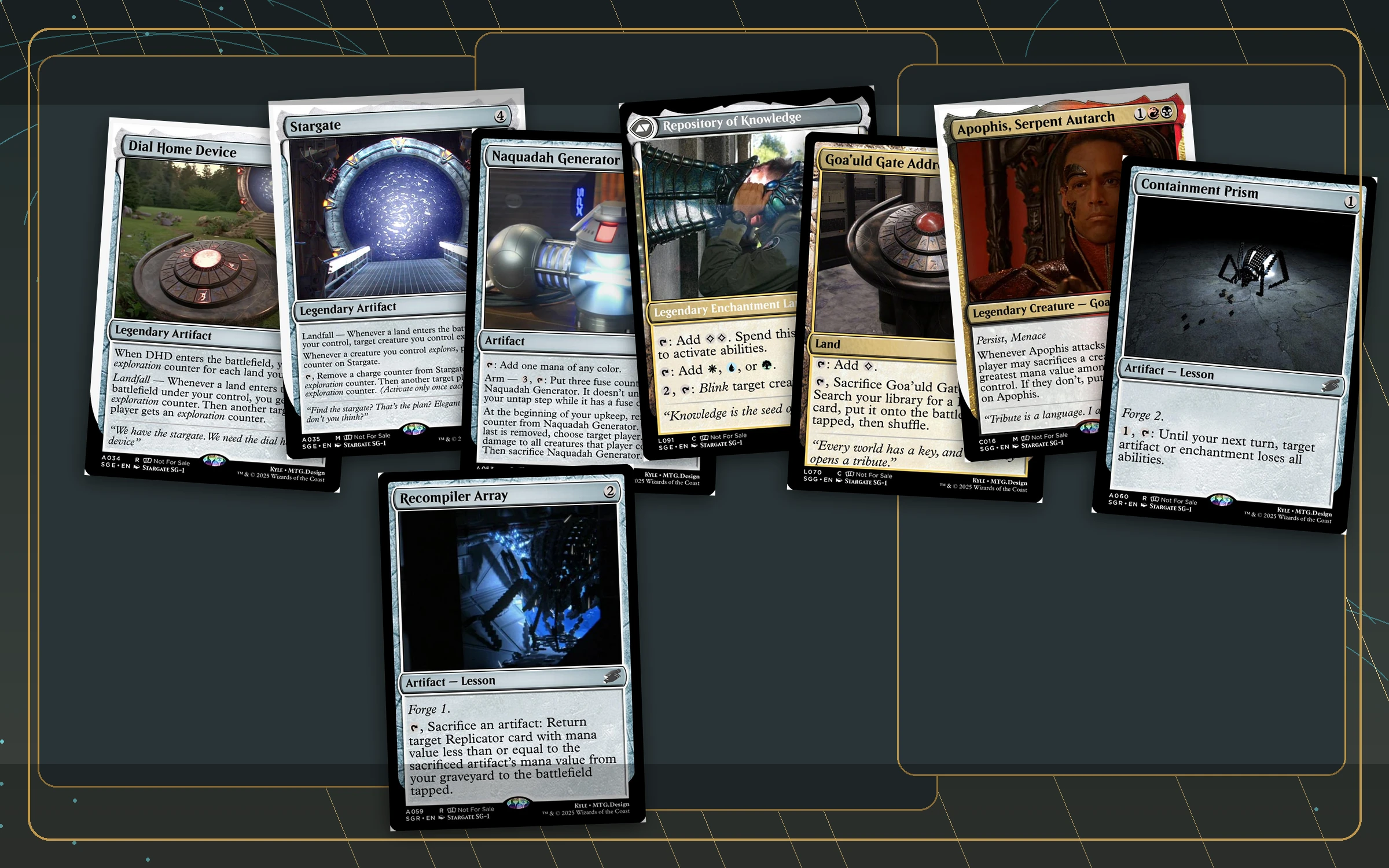
A custom sci-fi card world built around factions, missions, and table-tested pressure. The card work shows a different side of GM craft: readable mechanics, faction identity, and balance you can actually play.
At the table: Faction identity and readable cards make custom systems feel playable.
Explore moreA 5+ year homebrew campaign about ordinary people rising into mythic consequence across war, faction politics, corruption, and destiny-breaking choices.
Peasants to Kings is the long-form worldbuilding spine of the portfolio. It shows campaign architecture: living canon, recurring factions, player-driven escalation, session recaps, lore packets, and consequences that keep moving after a scene ends.
For a public table, the important lesson is not "more lore." It is how to make a deep world playable. Players need handles: a clear threat, a faction they understand, a place they can affect, and a reason their next choice matters.
Peasants to Kings is not only a map and lore system. It is a campaign where character arcs keep returning as songs, journals, faction pressure, and table memory.
The featured video gives a focused look at Peasants to Kings as a long-running campaign: character pain, world pressure, and mythic fallout braided into a story players can still follow.
The deeper P2K archive includes text roleplay, journals, recaps, faction threads, story playlists, and live sessions. Public copy here stays short so the proof supports the portfolio instead of becoming a lore dump.
The P2K source pool includes captured journals, story threads, recaps, and lore exports. The public version distills that material into proof of campaign memory: players can leave the live session and still find character voice, world motion, and next-step context waiting for them.
Skrik's story playlist shows how side characters can become campaign memory: not a lore dump, but a trail players can revisit when the world starts pulling on old choices.
This playlist gives visitors a direct watch surface for the Skrik arc. It supports the portfolio claim that Kyle keeps emotional continuity alive outside a single live session.
The live P2K playlist lets visitors see table pacing, player choice, recap rhythm, and how the world moves in real play.
These recordings back up the written case with live-play evidence: how Kyle frames scenes, listens to players, resolves chaos, and keeps a large world understandable in motion.
The portfolio value is not the size of the lore. It is the ability to turn long-running complexity into a table where players know what they can do next.
A persistent homebrew world with recaps, lore packets, faction records, side-character arcs, and structured continuity across years of play.
The setting feels large without becoming homework. Players can follow the thread, recognize pressure, and see their choices leave tracks.
Kyle can manage complex campaign material, keep player agency visible, and make continuity useful for real people at the table.
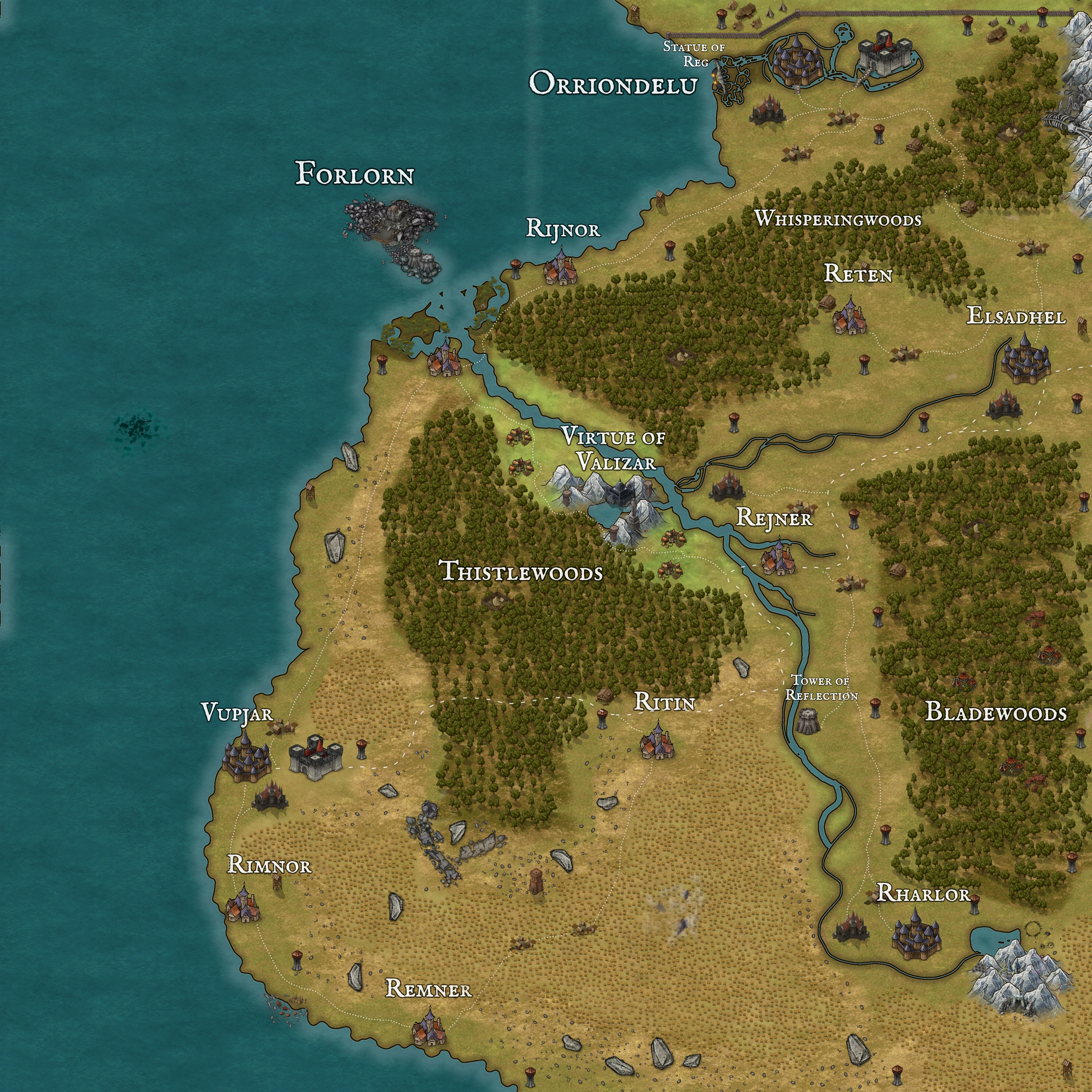
These snapshots show how Peasants to Kings stays playable between sessions: maps, player art, Discord structure, and public worldbuilding media.
The regional map is not just mood. It gives the table named locations, roads, faction space, and recurring story sites that make long-form play easier to re-enter.
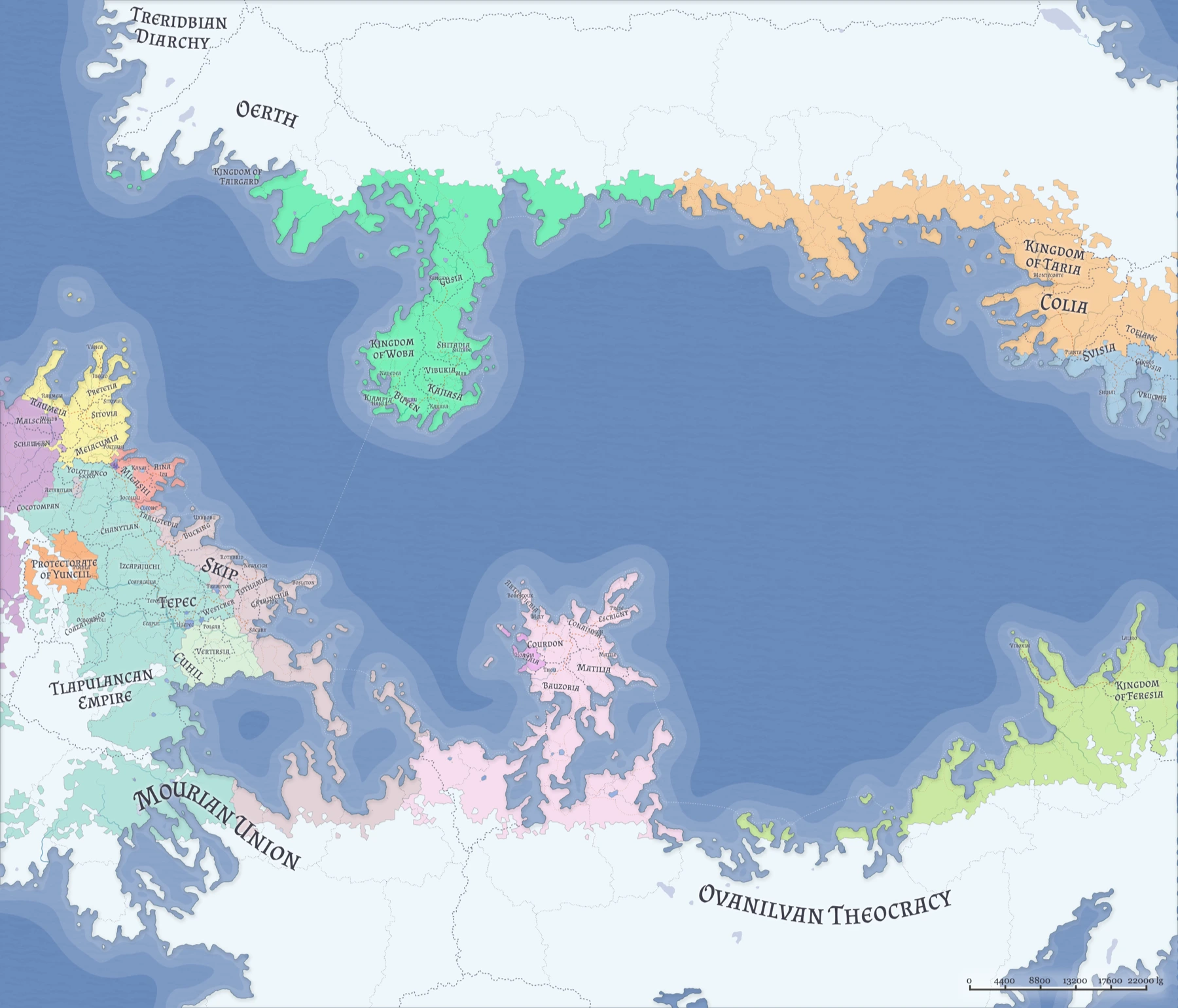
Terria shows the campaign has political and geographic scale beyond a single adventuring site.
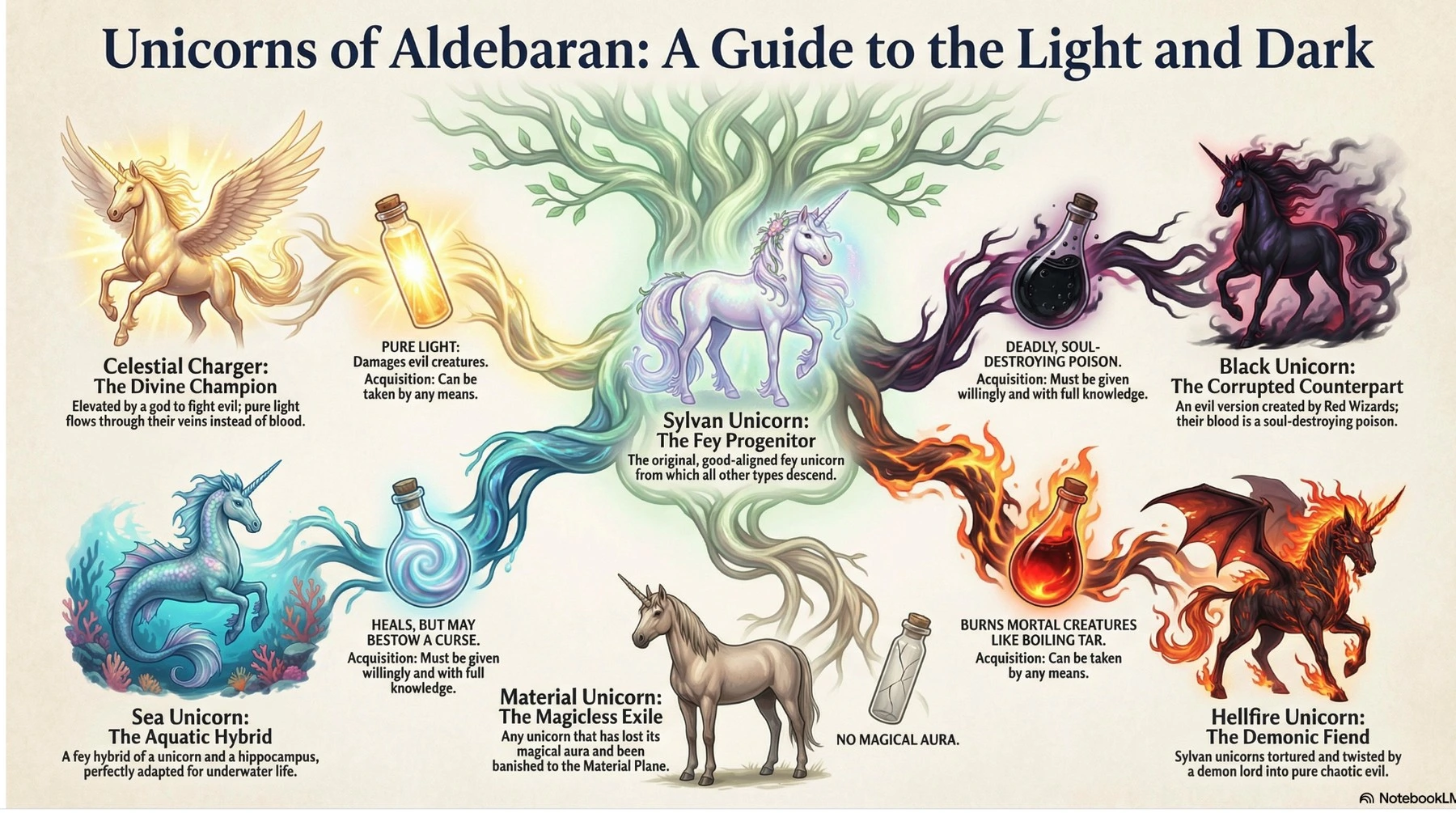
A creature-family guide turns setting depth into a fast reference players can scan without needing a lore lecture.
Open readable preview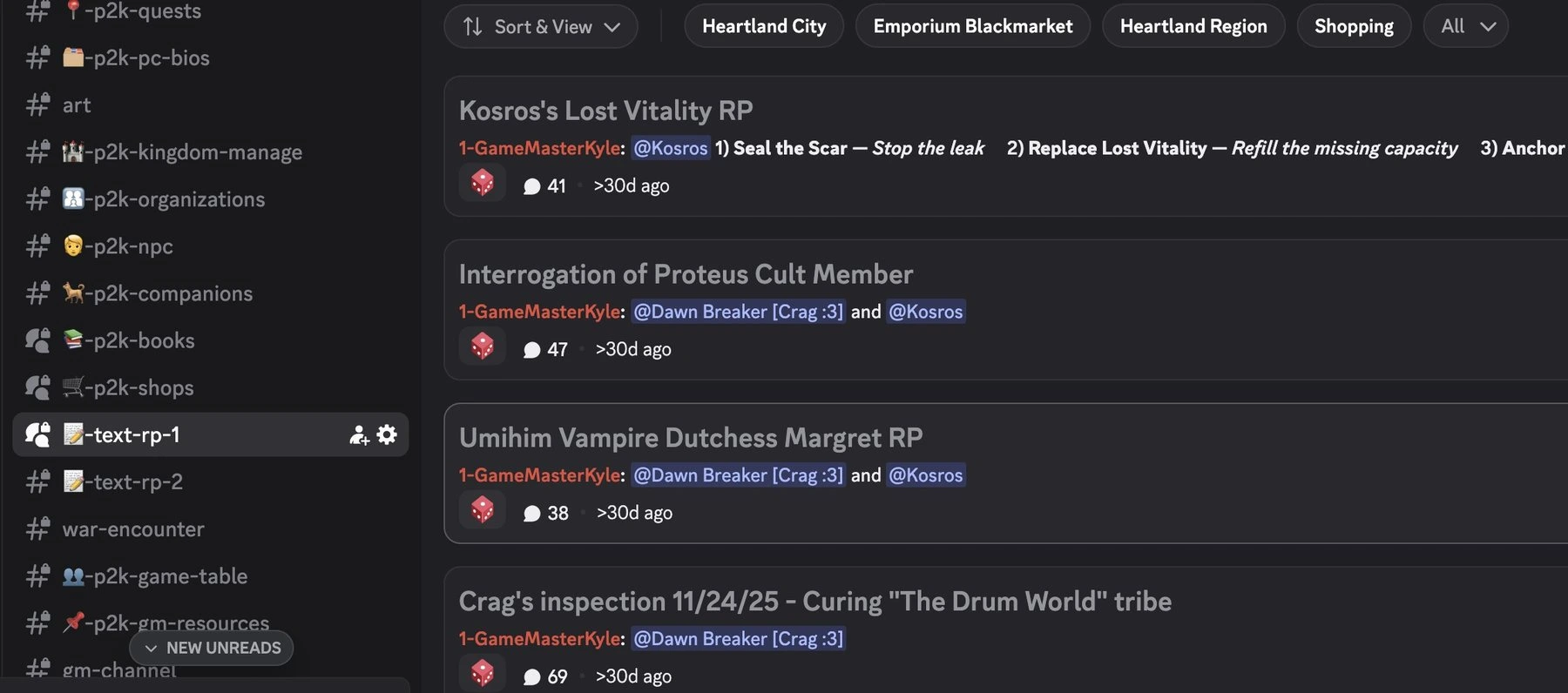
Thread indexes, maps, organizations, shops, and text-RP spaces show a world that keeps moving between live sessions.
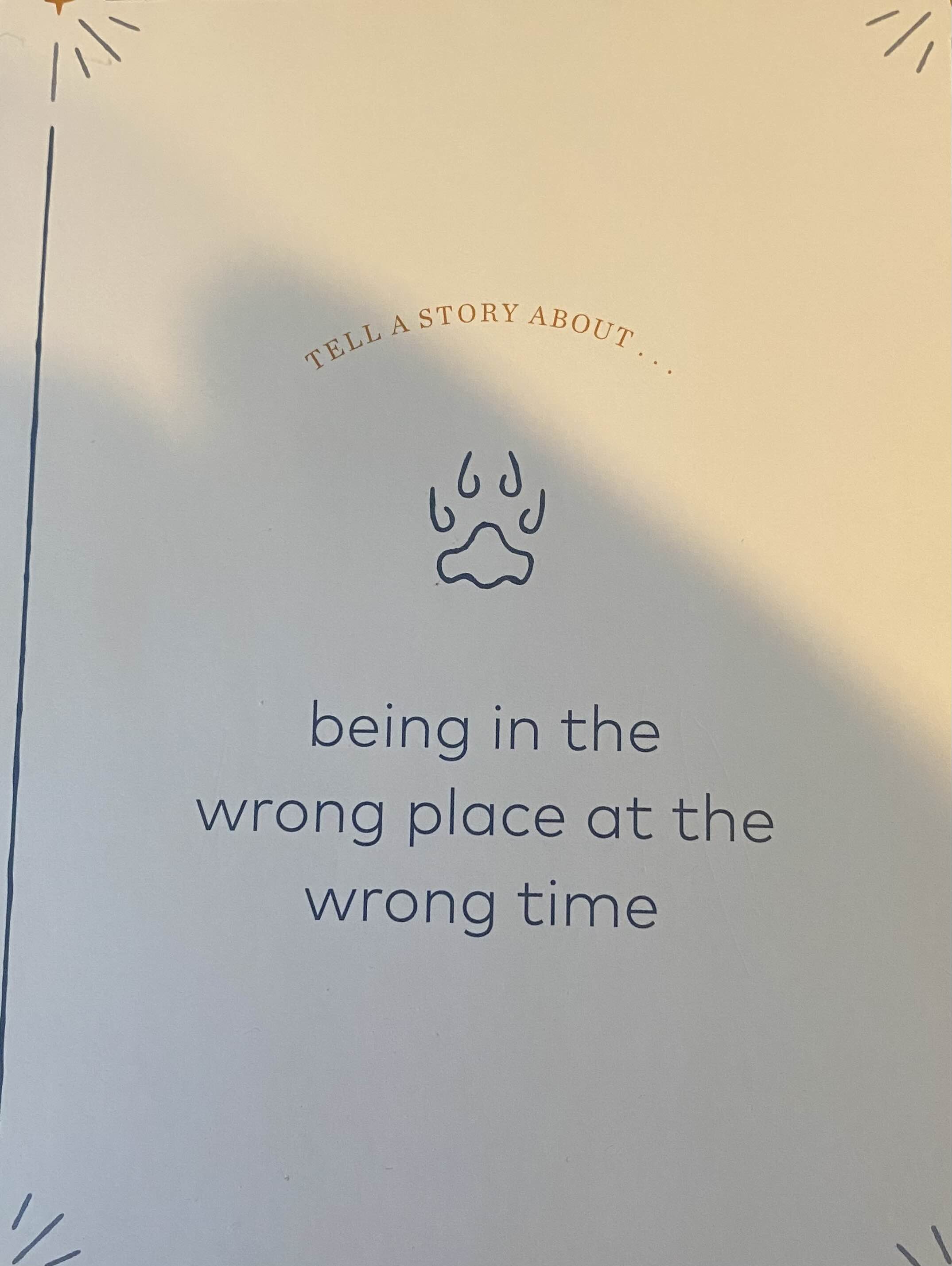
A simple prompt turns world memory into character voice: tell us what happened when you were in the wrong place at the wrong time.
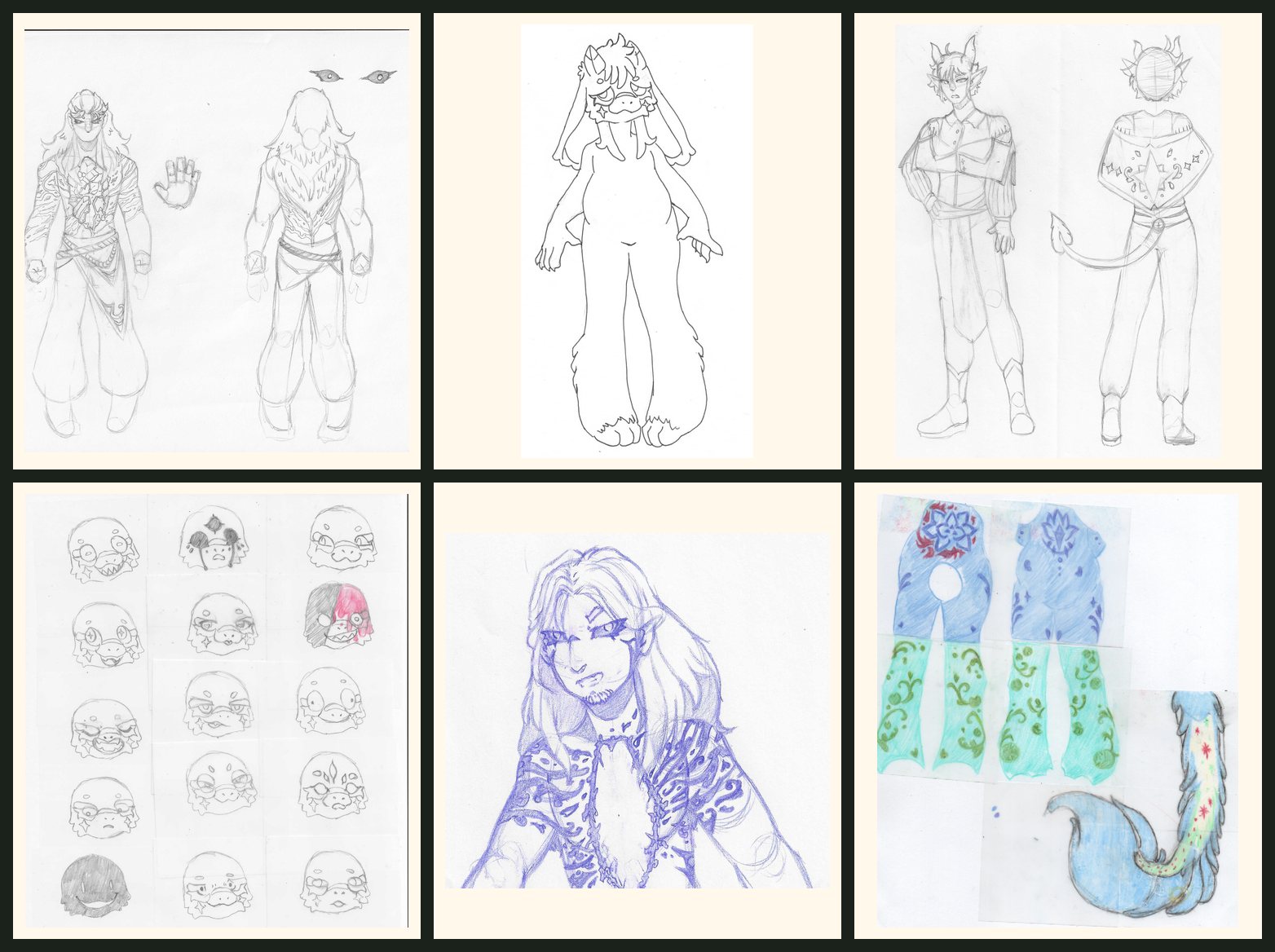
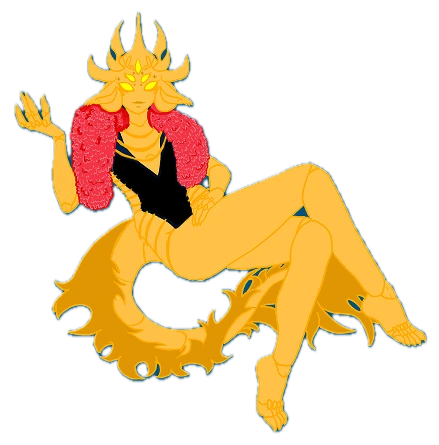
Player character art gives the campaign emotional anchors: people at the table can see who they are becoming.
A darker P2K story card for the mythic-horror lane: strange pressure, emotional consequence, and a world that remembers what happened.
The top TikTok gives visitors a quick public signal of the world and the GameMasterKyle voice. The deeper written and channel links sit beside it, instead of creating stretched empty cards.
Long-form GM Binder material gives Peasants to Kings book-length proof: lore, locations, threats, and playable world texture.
Open Citadel of Suffering Open P2K bookThe YouTube channel holds lore, session, and recap material that supports the broader campaign proof.
Open YouTube channelFactions, places, and consequences persist, so player choices feel like they leave tracks.
The campaign gives players enough structure to act without making the story feel prewritten.
Recaps and lore systems keep long arcs usable instead of turning continuity into homework.
A colorful Daggerheart one-shot where fantasy labor, magic, morale language, and performance review culture collide at the table.
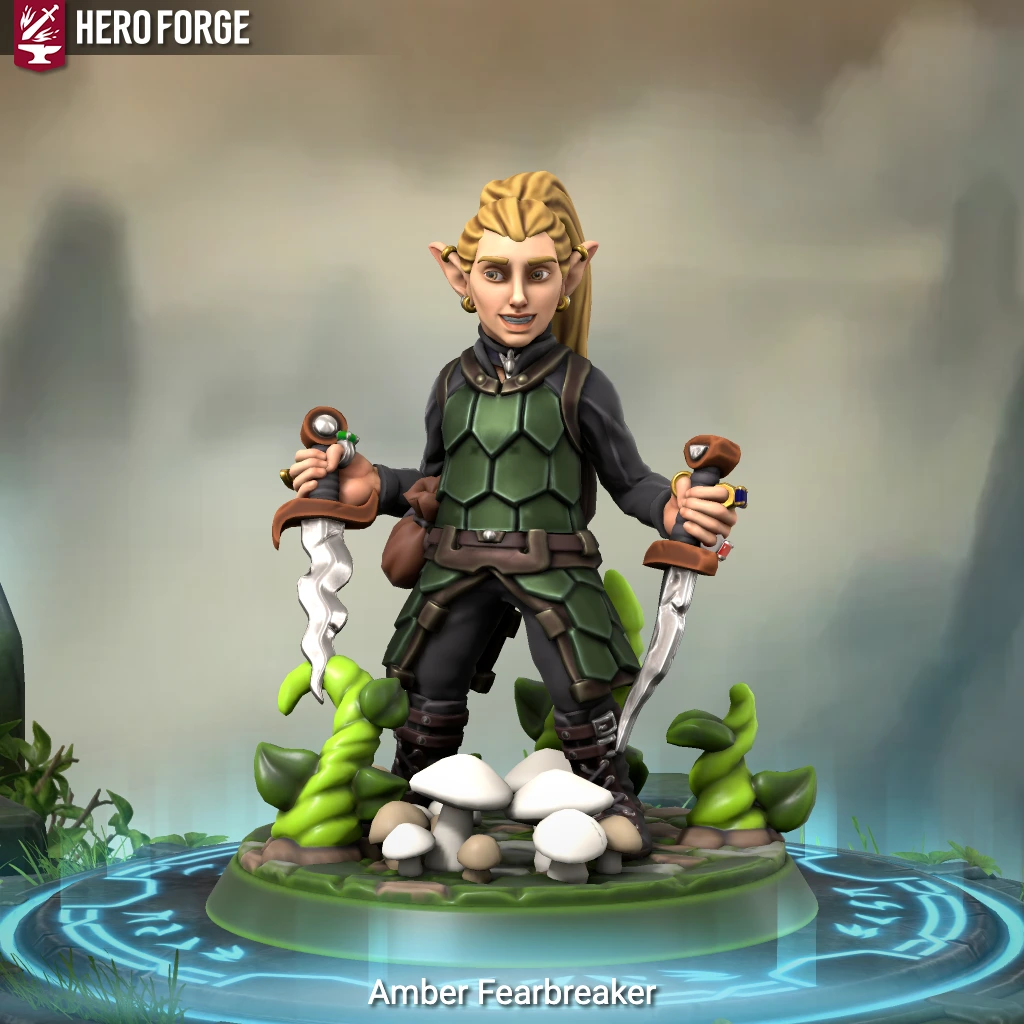
Peril to Profit packages a sharp premise into an event-ready table. It is corporate dystopian comedy in a high-fantasy wrapper: hazard forms, shiny incentives, smiling bosses, and a tower that makes the cost of every bad choice visible.
The playable module is shaped for 6 players over 3-4 hours, with pre-generated support, maps, stat blocks, pacing guides, and a physical Fear mechanic using a Jenga tower.
Peril to Profit works when the comedy, the handouts, the player interviews, and the table pressure all sell the same absurd corporate fantasy machine.

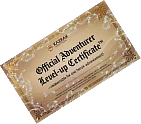
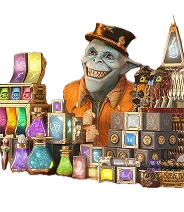
The Kazrak interview gives Peril to Profit a human anchor: the premise is funny on the page, but the table memory is what makes it stick.
The module uses bright fantasy props, vendor logic, debt jokes, and physical pressure so players can understand the tone quickly and still make meaningful choices inside it.
The P2P evidence lane includes character artifacts, vendor materials, module structure, session media, and interview material. Public copy keeps the emphasis on what a visitor can verify: artifact-driven tone, playable pressure, and player-facing memory.
This playlist gives Peril to Profit its own live-play proof surface, separate from the Kazrak interview so neither section has to carry the other.
The live-play playlist shows pacing, table comedy, risk escalation, and how the physical tower pressure supports a colorful corporate fantasy premise.
These are quick cuts from the live Peril to Profit videos above: table jokes, character pressure, and the corporate-fantasy chaos in bite-sized proof.
The full playlist stays intact for deep review. This rail gives visitors a faster read on the table energy, humor, and player-facing absurdity.
Scroll the clip rail to watch the sequence in place.
Watch Peril to Profit short clip 1
Watch Peril to Profit short clip 2
Watch Peril to Profit short clip 3
Watch Peril to Profit short clip 4
Watch Peril to Profit short clip 5
Watch Peril to Profit short clip 6
Watch Peril to Profit short clip 7
Watch Peril to Profit short clip 8
Watch Peril to Profit short clip 9
Watch Peril to Profit short clip 10
Watch Peril to Profit short clip 11
Watch Peril to Profit short clip 12
The funny premise does real work: it gives organizers a pitch, gives players a tone, and gives the table a visible way to feel pressure together.
A 3-4 hour Daggerheart one-shot for 6 players with pre-generated support, maps, stat blocks, pacing guides, and a Jenga-tower Fear mechanic.
The table gets the bit quickly: bright fantasy adventure filtered through performance reviews, hazard forms, and a tower that makes danger public.
Kyle can package an event-ready premise with a clear runtime, tactile mechanics, fast onboarding, and a memorable table hook.
Peril to Profit uses branded handouts, character-facing mechanics, table maps, and public videos to make corporate fantasy comedy playable fast.
The guide turns the setting voice into a table object: cheerful branding, survival pressure, and vendor logic all in one player-facing artifact.
Open PDF in new tab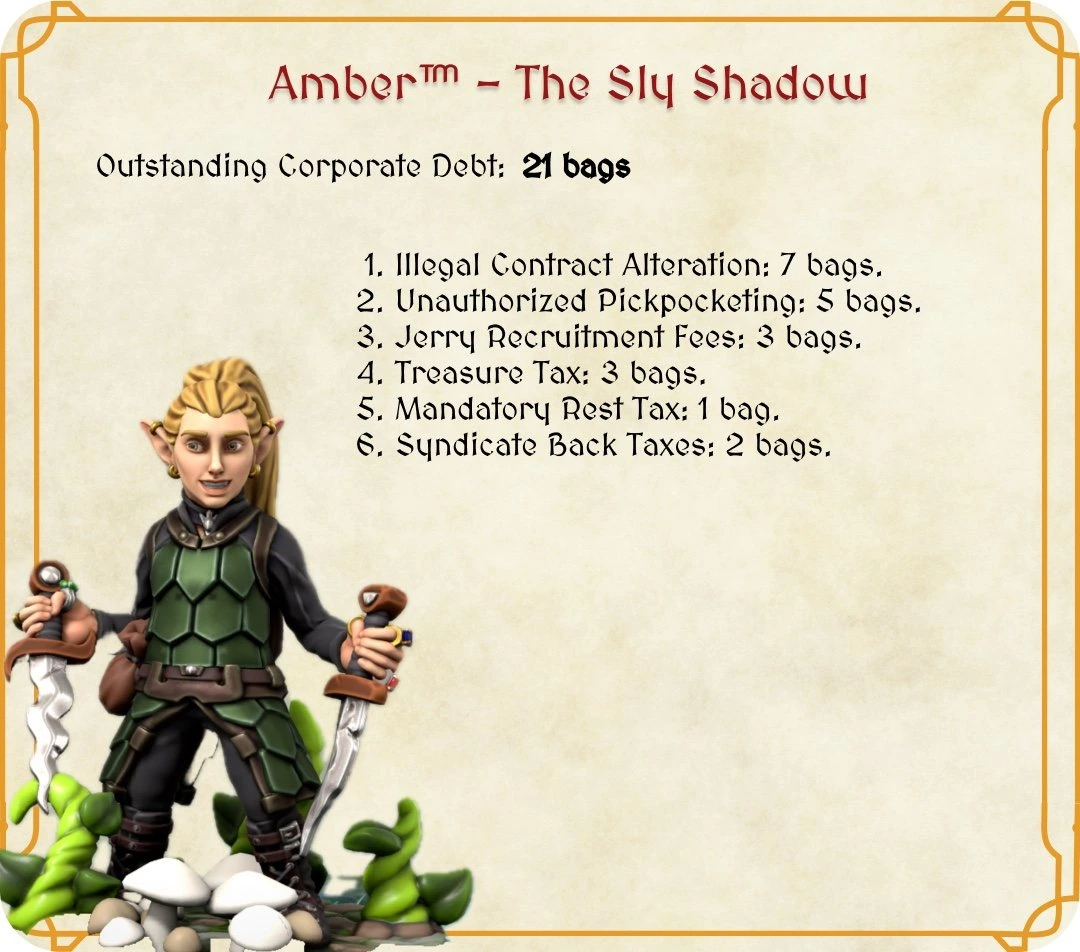
Debt is not just flavor. It becomes a number, a joke, and a reason for a character to take risks.
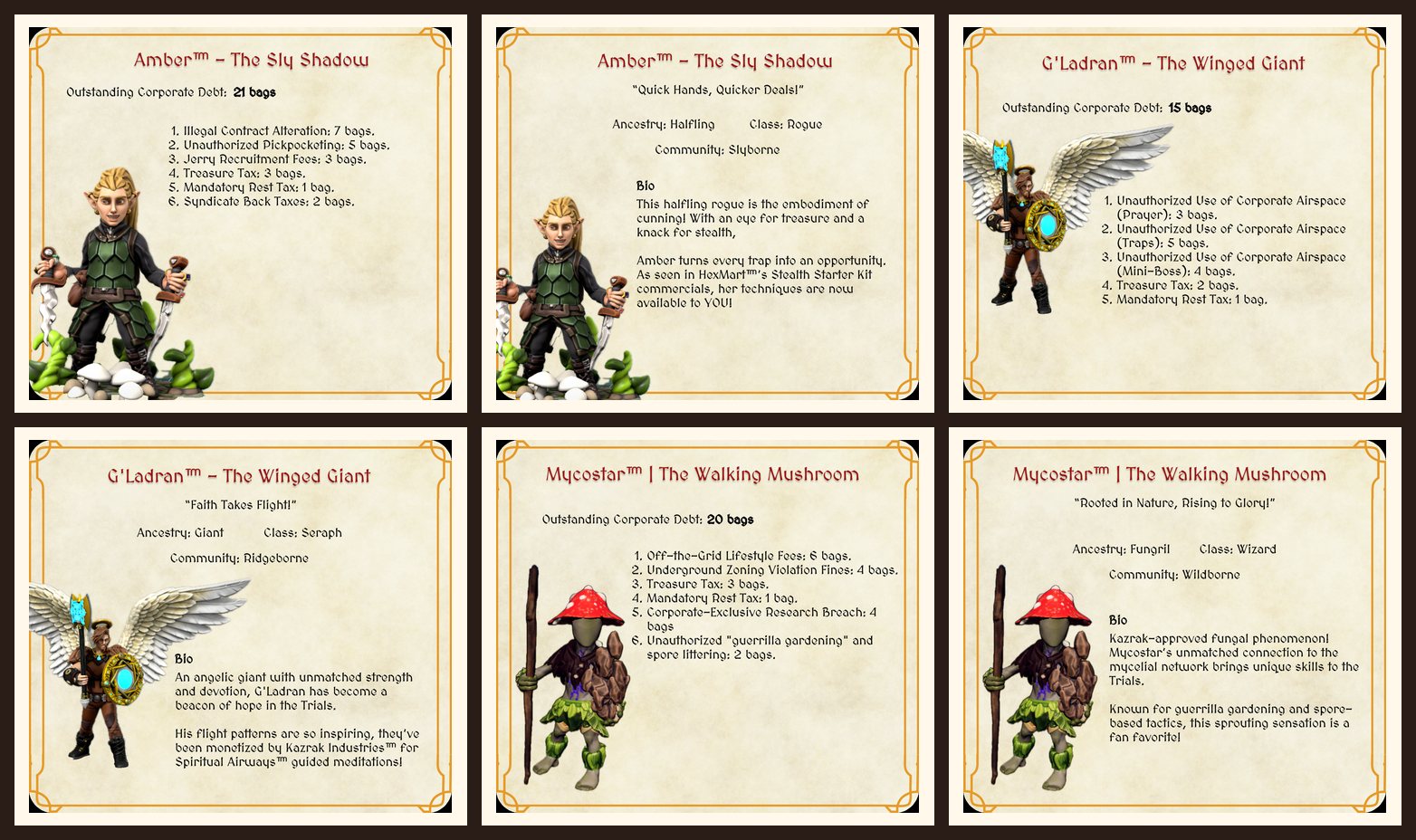
Bio and debt cards help players understand tone, motive, and stakes before the table gets bogged down.
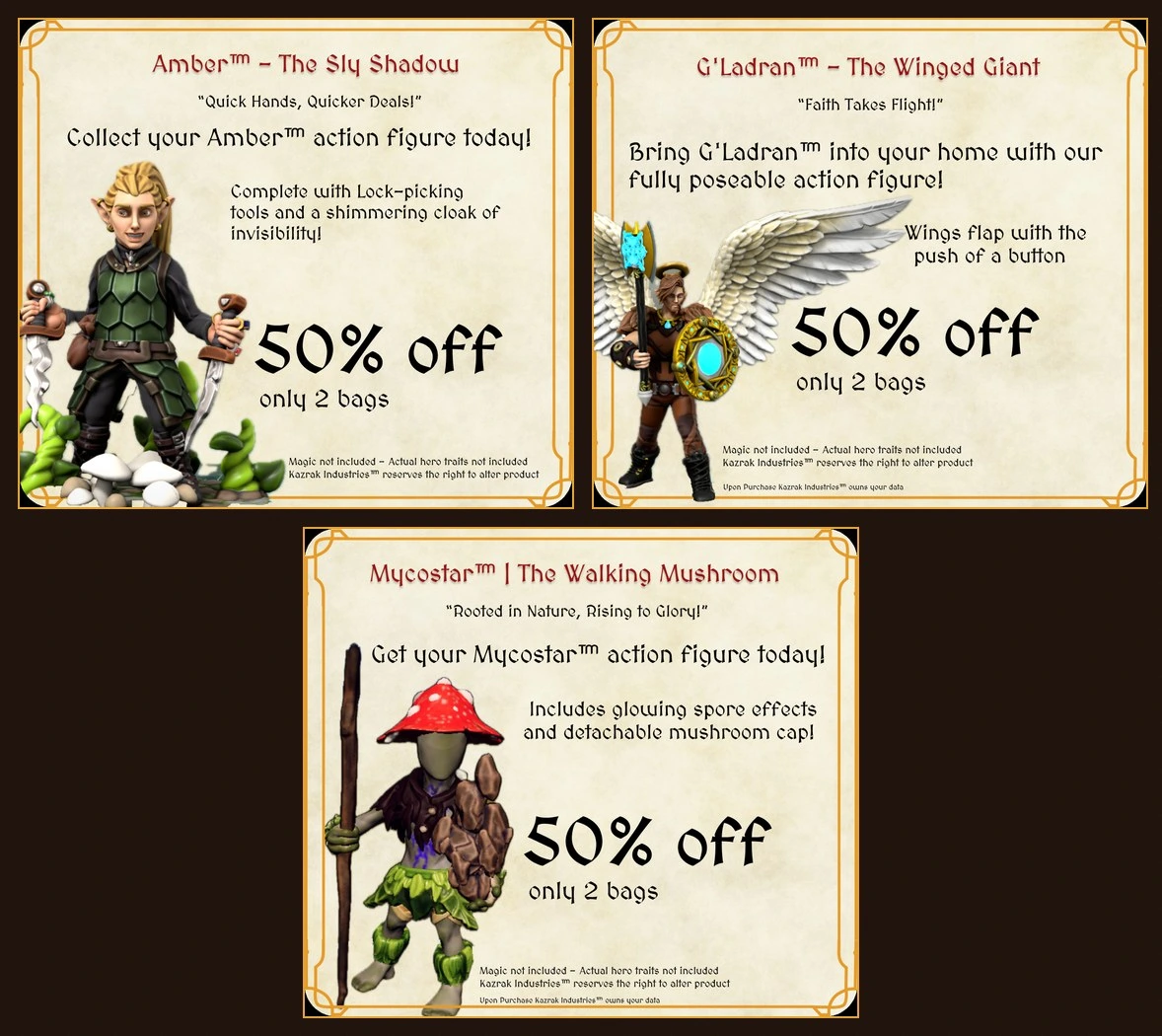
Fake action-figure ads turn character setup into comedy players can read fast: motive, tone, and the awful bargain in one glance.
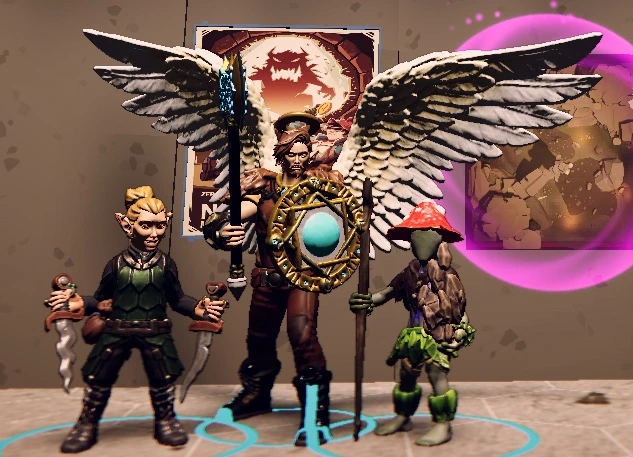
Character visuals give the group a quick read on who is in the party before the first scene starts moving.
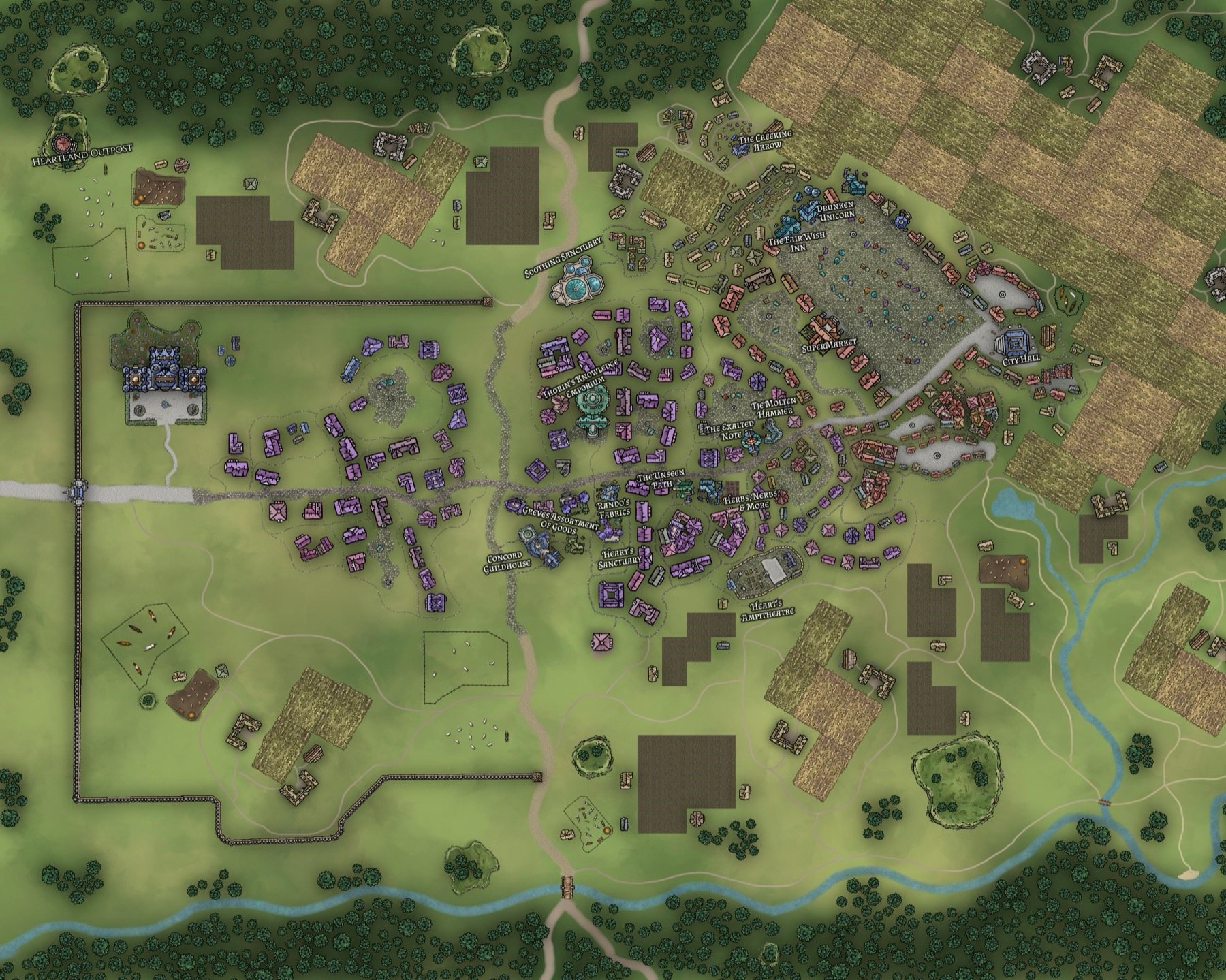
Named shops, civic spaces, and roads give the comedy somewhere concrete to happen.
A public pre-session video shows campfire questions and character-building setup before play.
The recap is the high-drama media lane: corporate fantasy absurdity pushed into cinematic stakes.
The GM Binder packet gives the corporate-fantasy premise a fuller written artifact: setting voice, event shape, and table-facing material in one place.
Open Peril to Profit bookKeep the page light, then let interested visitors jump to the public channel for more sessions and recaps.
Open YouTube channelPlayers understand the premise immediately: fantasy adventure filtered through workplace absurdity.
The tower gives the whole table a shared read on danger, comedy, and escalation.
The format is built for a full table, a clear runtime, and a memorable special-event feel.
A fan-table sci-fi mission campaign built around briefings, objectives, maps, team roles, tokens, and episode-ready prep.
Echoes of Stargate is the mission-design case. It shows how to take a large sci-fi premise and make it playable through the tools players need first: a briefing, an objective, a map, a team role, and a reason the scene matters now.
The important proof is orientation. Players do not need to carry the whole universe in their heads before acting. The table has a mission frame, visual references, and concrete handles for where to go next.
Echoes of Stargate is not only tactical mission prep. It also supports character-specific aftermath, roleplay continuity, and story care between sessions.
The two-part Maia story shows a different side of the campaign: after-session care, emotional continuity, and character-specific payoff built around one player's arc.
Text roleplay sources such as Maia's kidnapping and Tea with Ruth support the public recap, but the page keeps raw Discord material private and visitor-readable.
The Echoes source set includes captured text-roleplay threads around Maia's kidnapping and quieter roleplay beats such as Tea with Ruth. The public story keeps that material summarized: the point is to show how Kyle supports character aftermath without publishing private thread dumps.
The table craft here is not lore recall. It is translating mission structure into playable scenes where players understand their role and the next decision.
Mission packets, after-action-style documents, prepared maps, character-role support, tokens, and episode assets for a cinematic campaign frame.
The team knows the mission, sees the space, understands their role, and can make decisions without a long lore lecture.
Kyle can build table tools for complex genre play: briefings, maps, tokens, scene pacing, and mission stakes that land quickly.
The proof is in the table materials: briefing snapshots, maps, tokens, and episode visuals that make the campaign easier to enter.
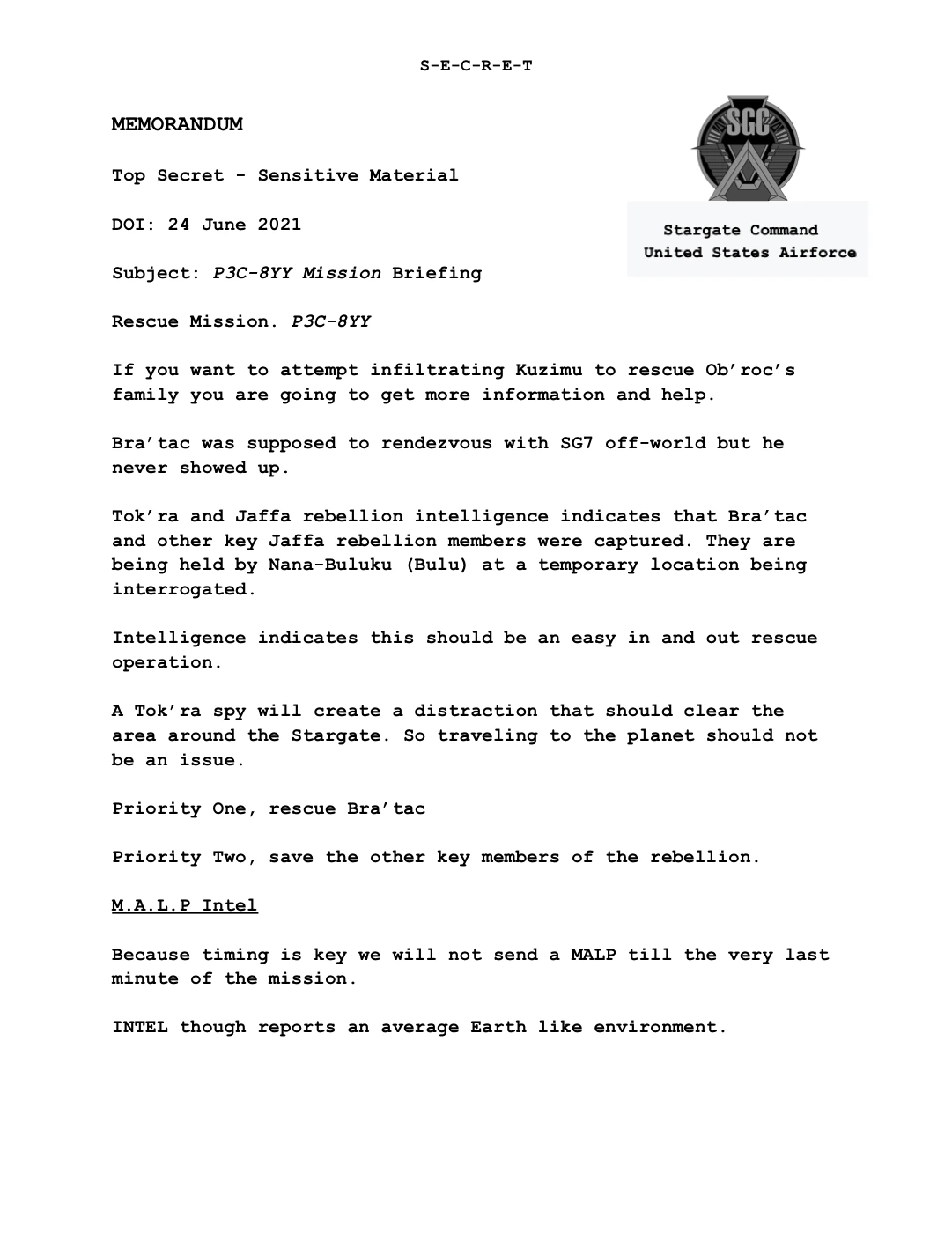
A briefing gives players a clean frame: who they are, what the objective is, and what kind of pressure the table is walking into.
Open PDF in new tab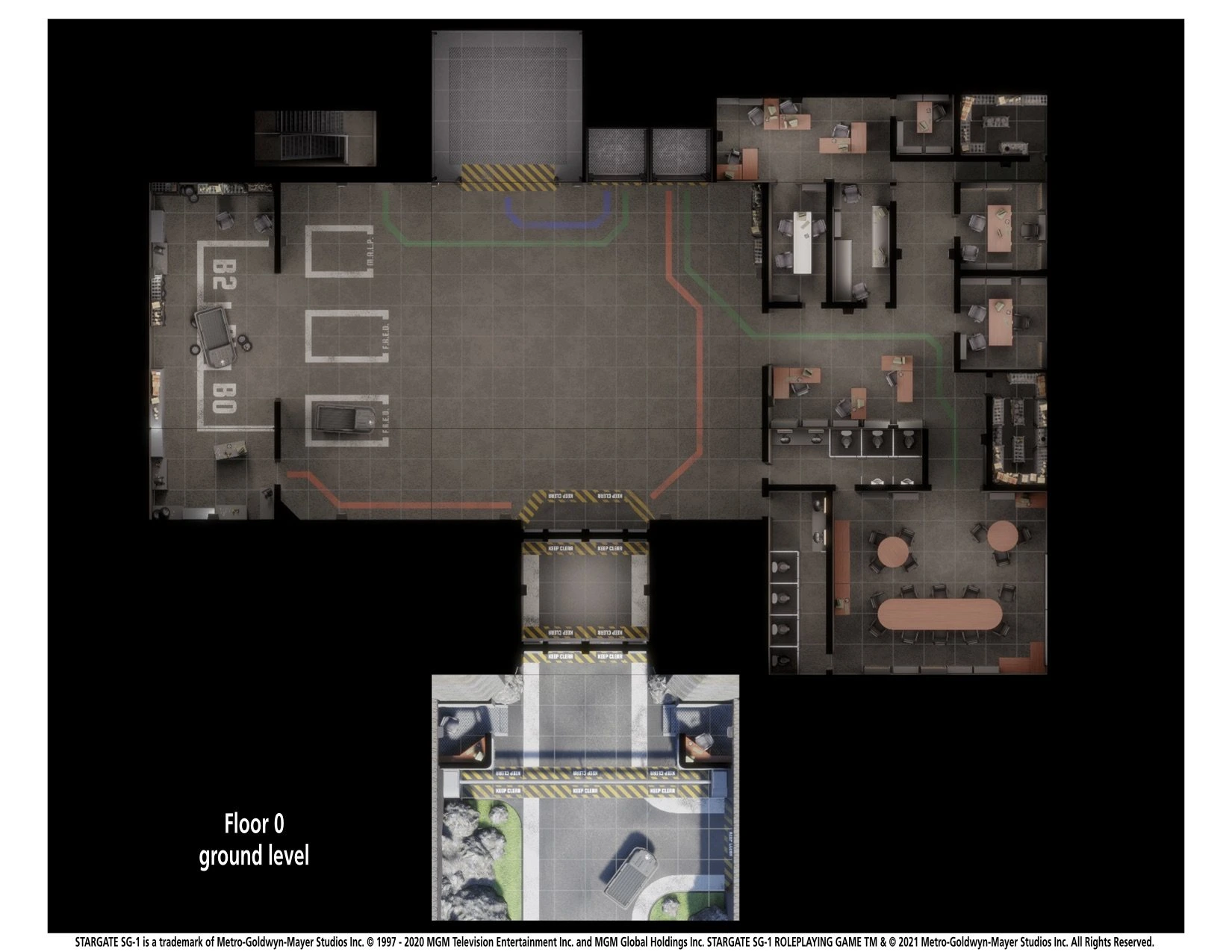
A prepared location gives the table a shared tactical object instead of a vague mental image.
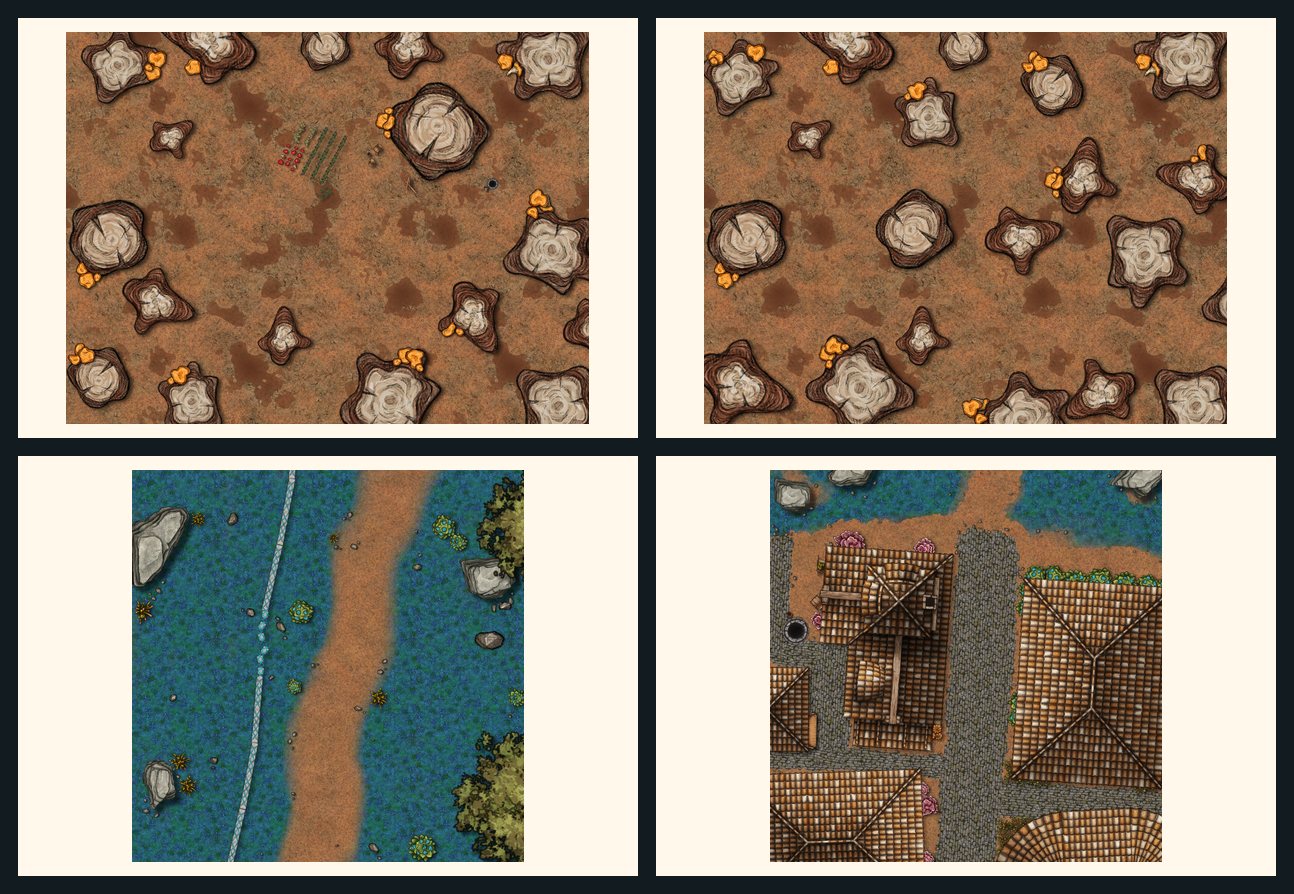
Smaller maps help scenes move cleanly when the mission shifts locations.
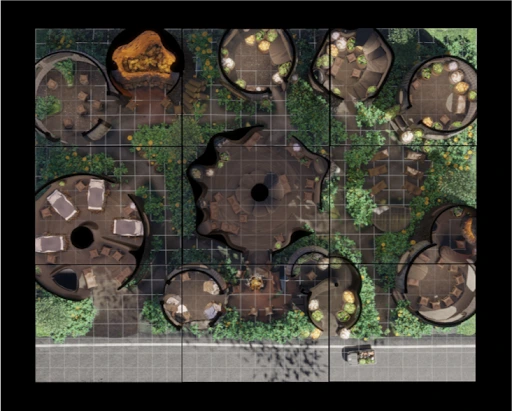
Tokens help players read who is in the scene and keep mission play moving.
Scene art and episode assets support the campaign's TV-mission rhythm without asking players to guess the tone.
This case is about mission RPG craft. The card-system case shows a different system-design lane.
Open card-system caseThe dedicated Discord gives interested players a clearer place to find the Stargate side of the table.
Join Stargate DiscordBring the room, the players, and the mission tone. I can help shape the first session.
Get in touchPlayers know what they are trying to do before the table gets buried in setting detail.
Maps and tokens create a common reference for action, tension, and tactical choices.
Briefing, mission, complication, and aftermath give the campaign a reliable shape.
A fan/personal Magic-style design project translating Stargate factions into playable mechanics, rules text, flavor, and balance knobs.
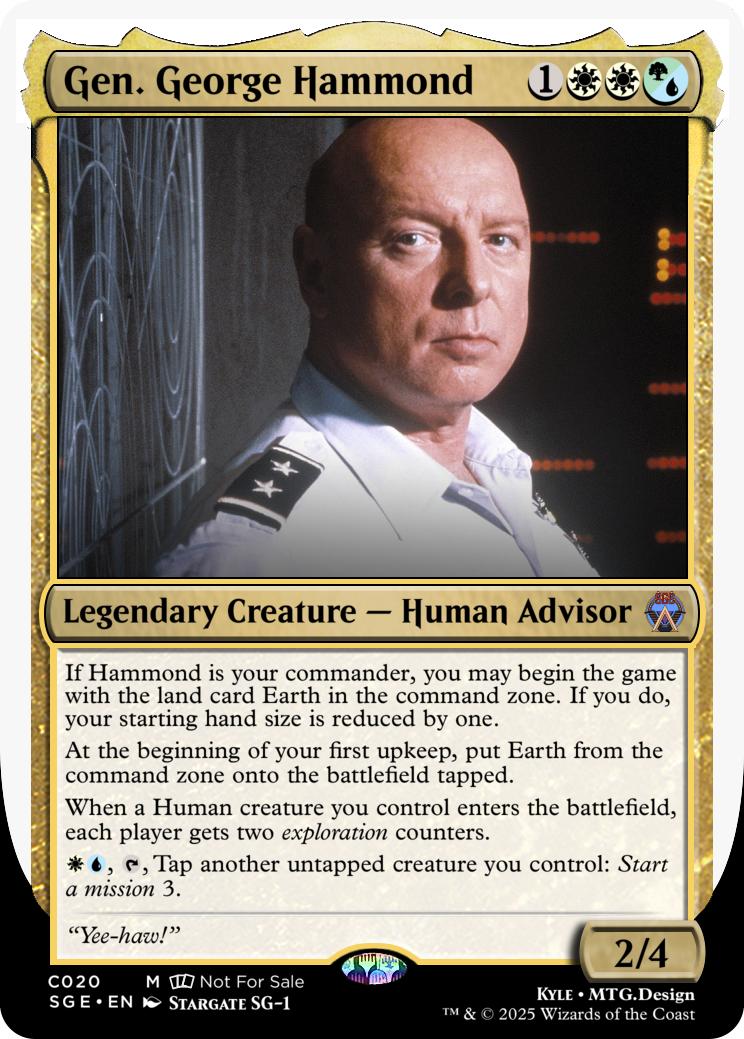
The Stargate card project shows system design through a different doorway: faction identity, balance budgets, readable rules text, and flavor that teaches the player what the deck wants to do.
The working card files cover Earth, Goa'uld, Wraith, and Replicators, with mana costs, rules text, flavor text, budget totals, fairness notes, and tuning notes. The preview uses real Cockatrice card exports, not generated sci-fi stand-ins.
The card work is useful because it makes design judgment visible: faction identity, readable rules, balance budgets, and flavor all have to fit on the same object.
Custom Magic-style faction sets for Earth, Goa'uld, Wraith, and Replicators with costs, rules text, flavor, budget notes, fairness checks, and tuning knobs.
Each faction has a rhythm: exploration, domination, predation, or modular escalation. The card should hint at the strategy before the table slows down.
Kyle can translate source flavor into playable constraints, write rules people can parse, and tune a system instead of relying on vibes.
Earth, Goa'uld, Wraith, and Replicators need different rhythms, costs, and incentives.
Rules text and costs carry the learning load so the table can keep playing.
Budgets, fairness notes, and tuning knobs make the design adjustable instead of vibes-only.
An original pre-AI superhero campaign where underpowered, ridiculous heroes grew into a team through missions, powers, gear, and table-facing character sheets.
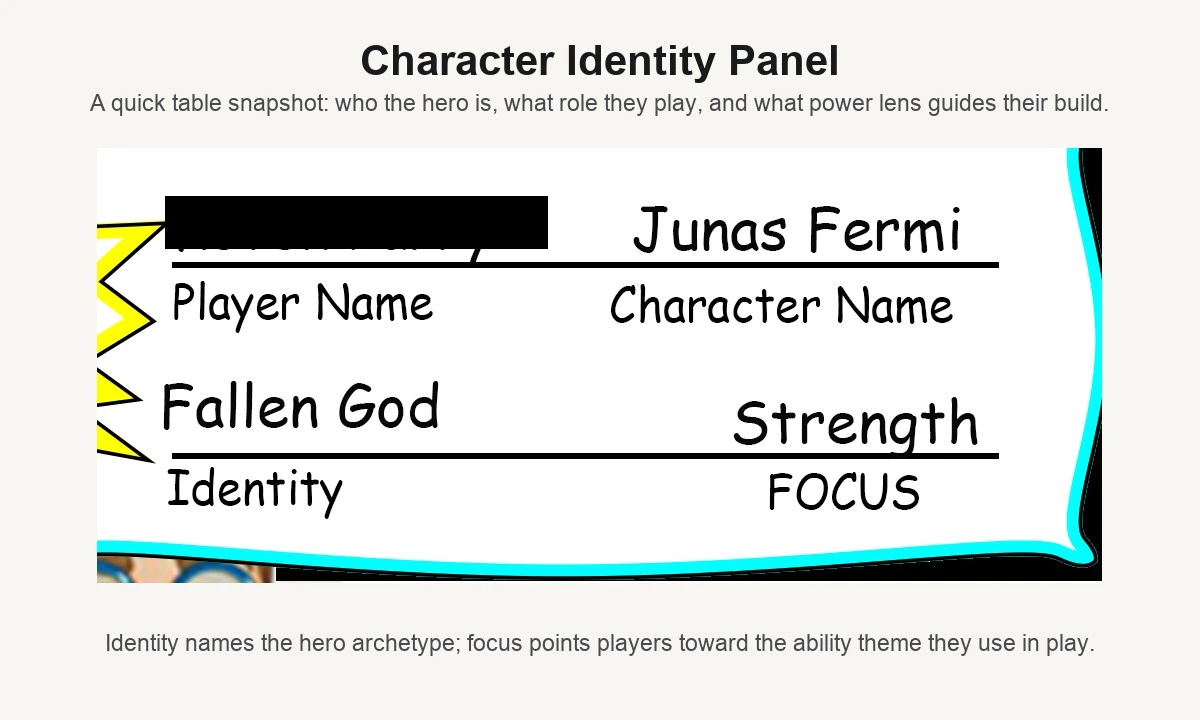
Supers & Specials shows a full custom-system instinct: make the rules visible, keep the character fantasy concrete, and give players a sheet that tells them what they can try next.
The project is less about publishing a rules book and more about table craft. Players had identity, focus, powers, resource limits, gear, and growth paths in front of them, so the superhero chaos stayed playable.
The design gives players enough structure to improvise: identity, limits, progression, and consequences they can point to on the sheet.
An original superhero rules set with character identity, focus, abilities, power tiers, gear slots, inventory pressure, and table-facing reference pages.
Players could see who their hero was, what powered them, what they could carry, which powers were unlocked, and how stronger options came online.
Kyle can build homebrew mechanics that stay legible in the room, then facilitate the comedy and pressure that come from those rules.
These artifacts show the game through the materials players could actually read, mark, and use during play.
The sheet asks players to define who the hero is and what lens guides their powers. That keeps the absurd superhero premise tied to choices at the table.
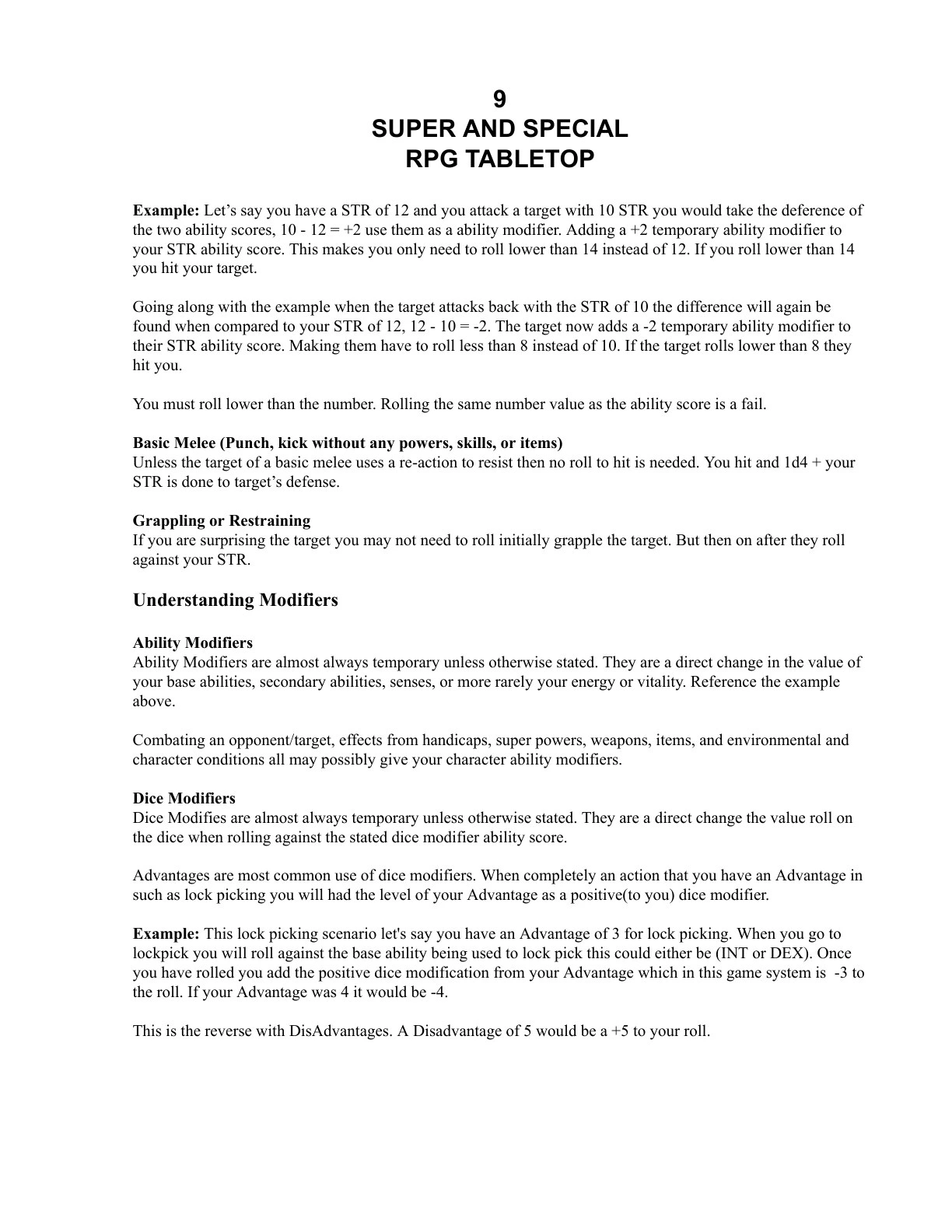
The rules page shows the core procedure in player language: compare the ability, apply a temporary modifier, and roll lower than the target number. The page is dense, but the mechanic is concrete.
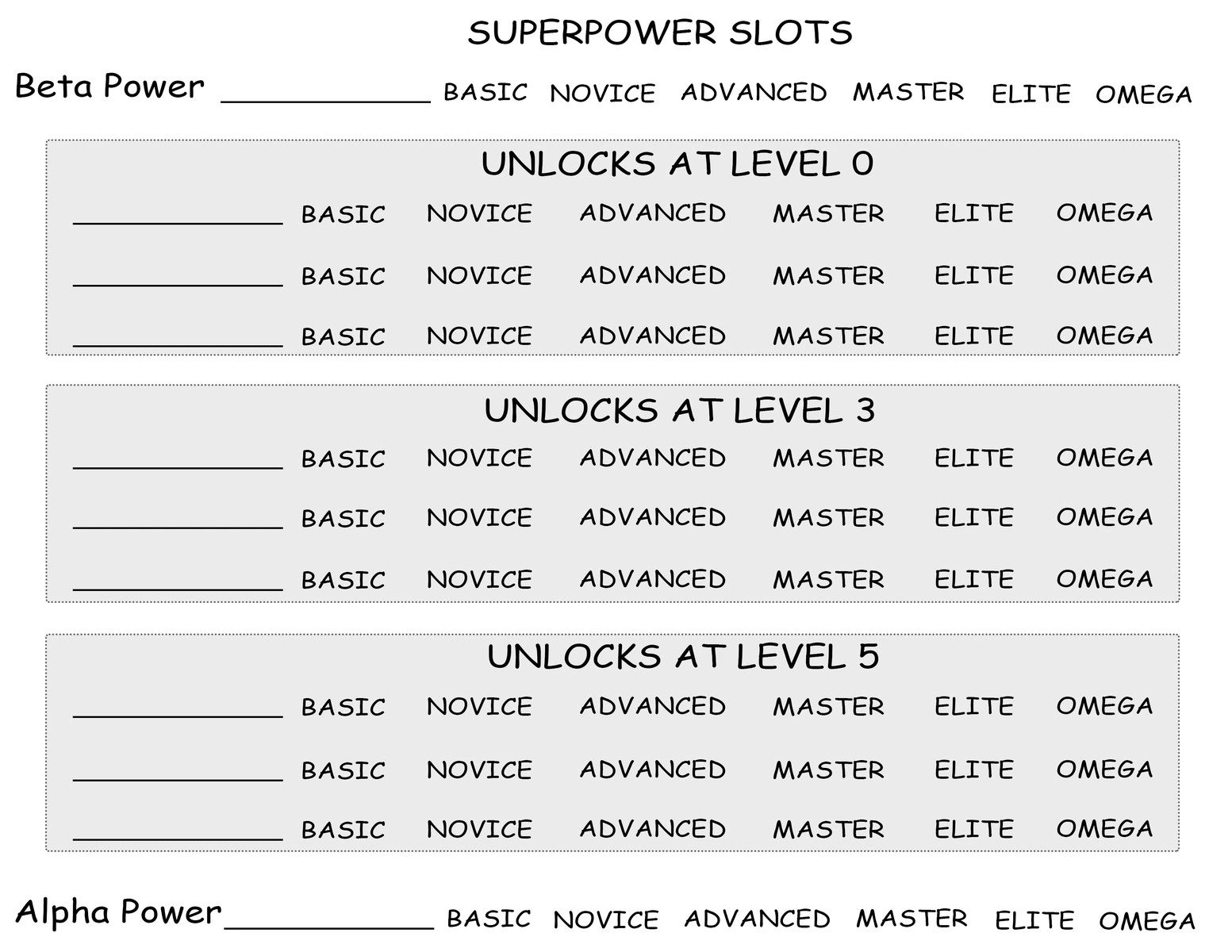
Power slots help players understand growth as a table object, not a hidden progression note.
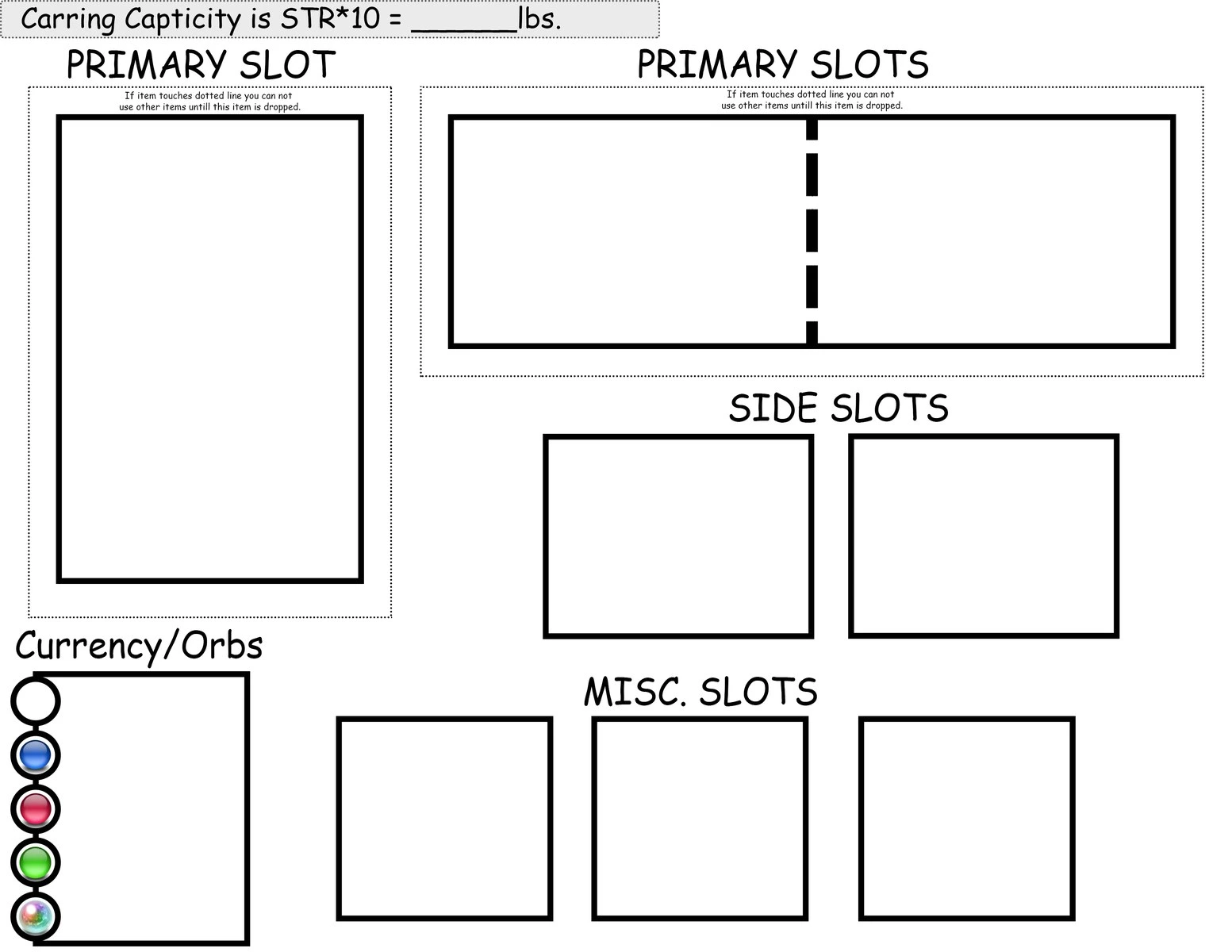
Slots make gear and carrying limits visible, so resource pressure can matter without slowing the whole scene down.
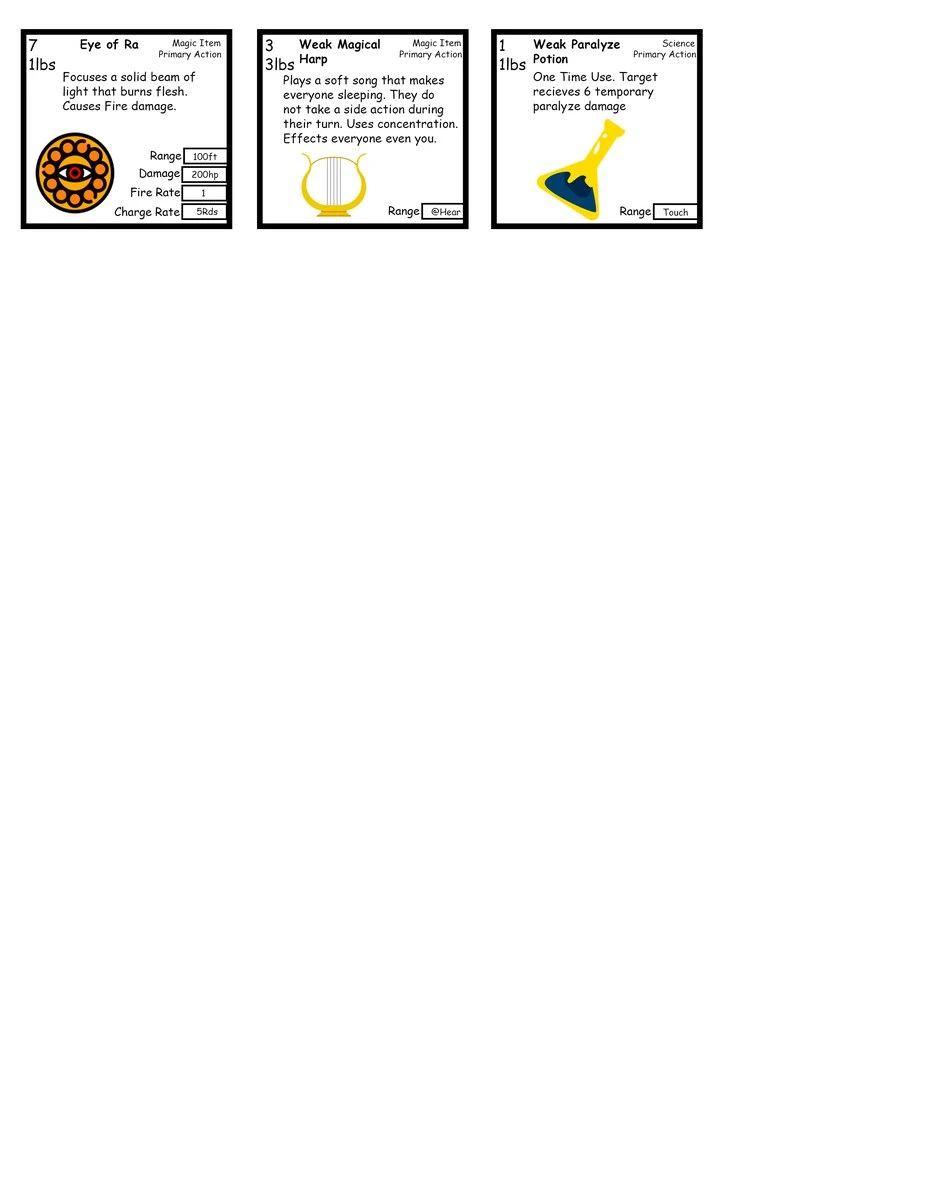
Special items give the campaign a practical toybox: upgrades, constraints, and small choices that help ridiculous heroes feel playable.
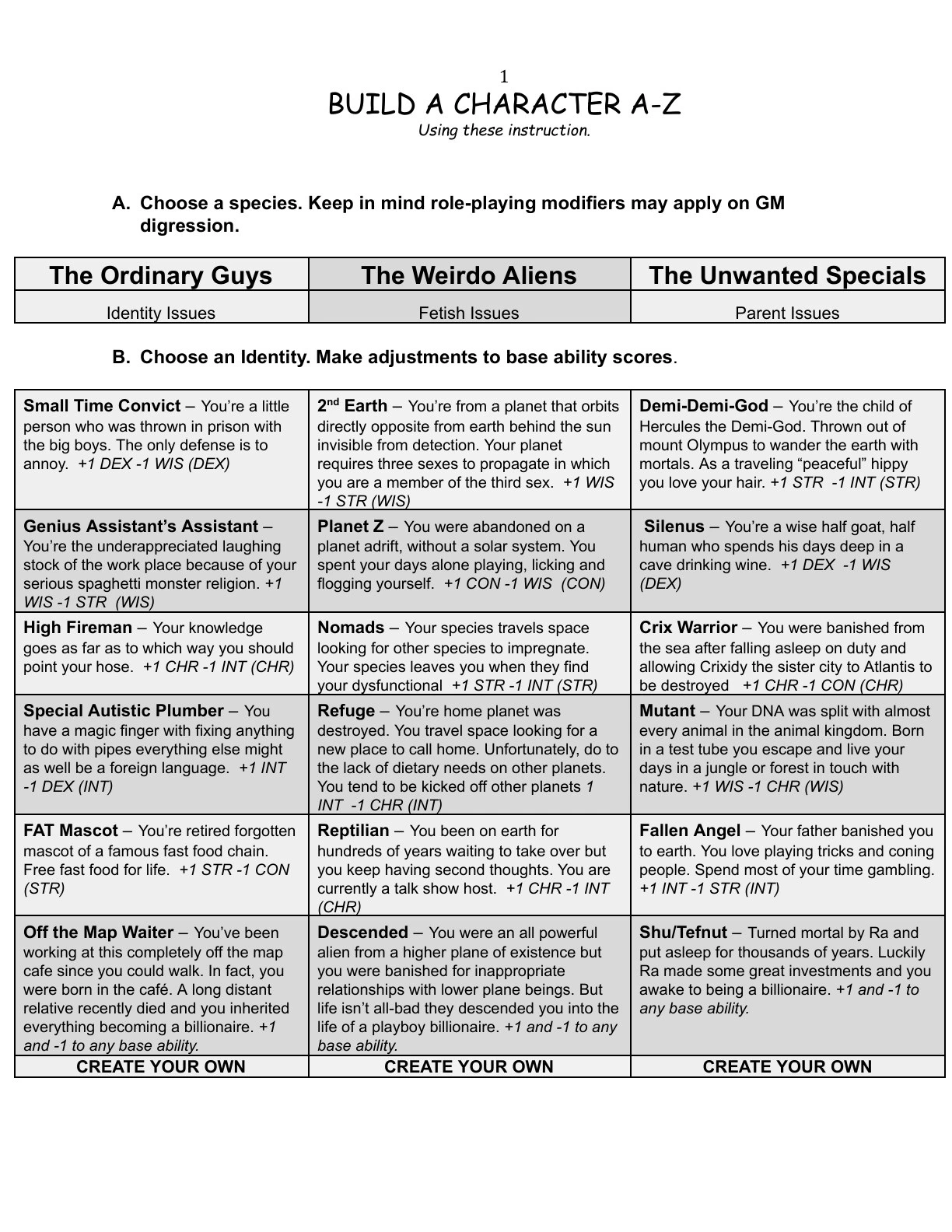
The character-build page shows the onboarding work behind the campaign. Custom mechanics only help if players can enter them without needing the GM to translate every choice.
Move from original superhero rules into the broader project index, or compare this with the Super Nintendo World adaptation case.
A brief fan crossover campaign that translated power bars, coins, Stars, trophies, boss gates, unlockable characters, and custom sheets into tabletop play.
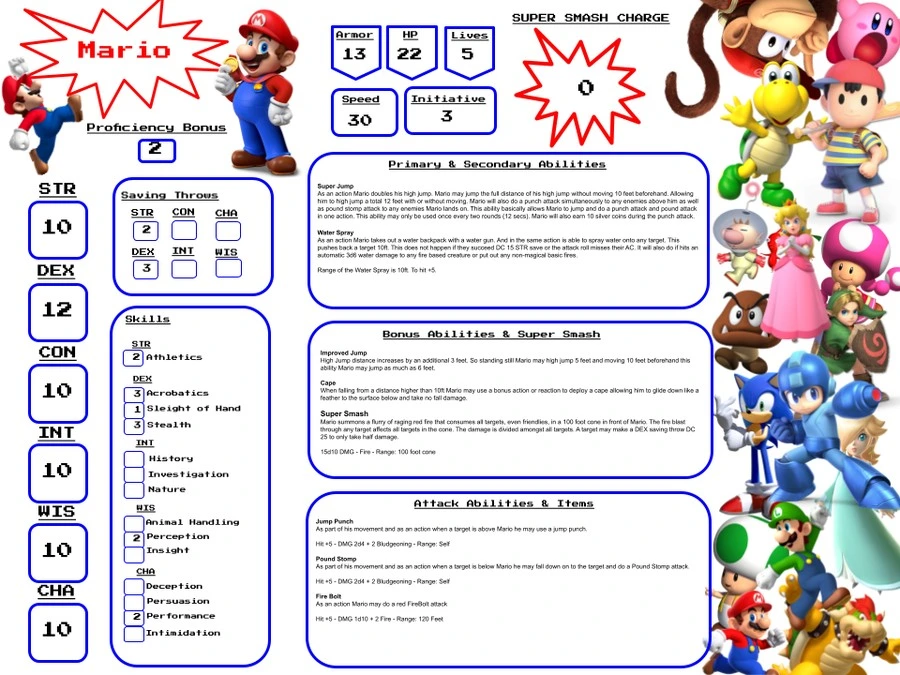
Super Nintendo World RPG is a compact adaptation case. The craft is taking a familiar video-game language and turning it into goals, rewards, character choices, and pacing the table can understand.
The page is not a claim to own the characters or world. It shows how a known play fantasy can become a table-ready loop with clear sheets, visible progression, and character-specific moves.
The design turns familiar platform-game feedback into tabletop procedures: collect, unlock, fight bosses, spend rewards, and bring new characters into play.
Power bars, coins, Stars, trophies, boss gates, unlockable characters, and character-specific moves became a shared tabletop loop.
Players had custom sheets that named stats, skills, Super Smash charge, abilities, attacks, lives, armor, and character strengths.
Kyle can translate a familiar premise into a gameable table structure without making players learn a full new rulebook first.
The strongest proof is the table loop: goals players recognize, sheets they can read, and progression they can track without stopping play.
Every player tracked a power bar. Coins, Stars, trophies, and boss wins pushed characters toward a final special move.
Coins found through exploration, enemies, and puzzles became pooled choices for upgrades, feats, lives, items, and new characters.
Stars, Red Coins, Blue Coins, trophies, Super Smash Balls, and Chaos Emeralds gave the party visible goals beyond combat.
Castles worked as major boss fights gated by Stars, translating video-game progression into campaign pacing.
Players could rescue, complete levels, and defeat bosses to unlock new playable characters, then spend coins to use them.
Each character had custom primary, secondary, bonus, attack, and Super Smash abilities instead of normal D&D classes.
Coins, Stars, trophies, boss wins, and unlocks gave the party visible goals beyond combat. The system turns video-game feedback into table decisions.
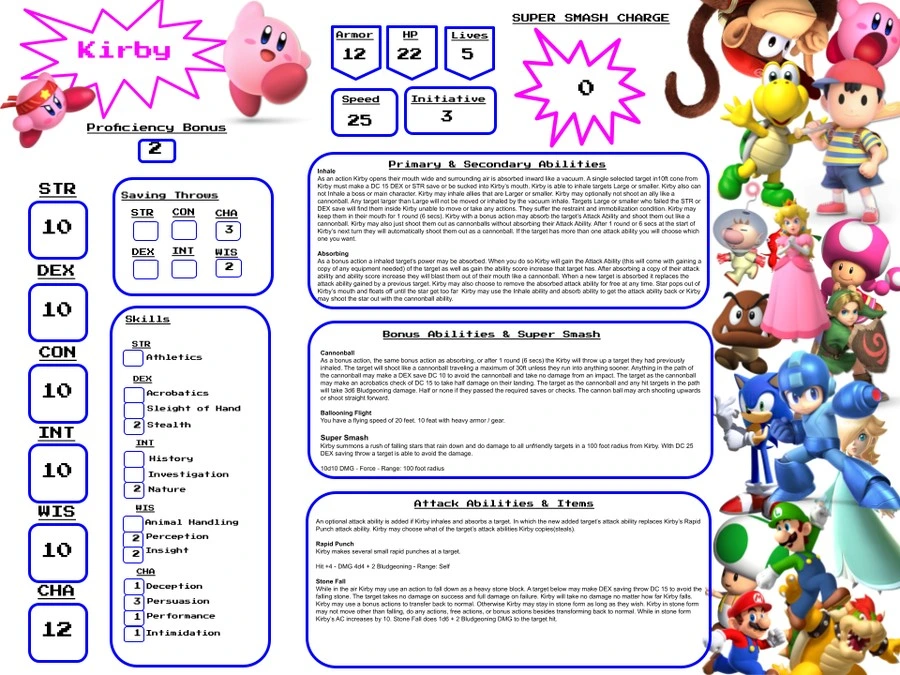
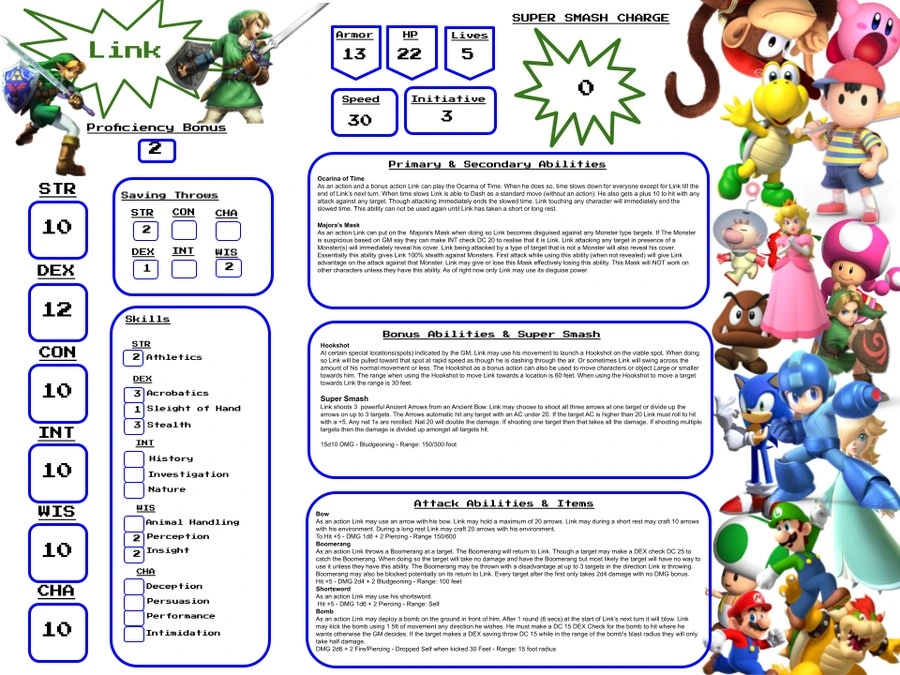
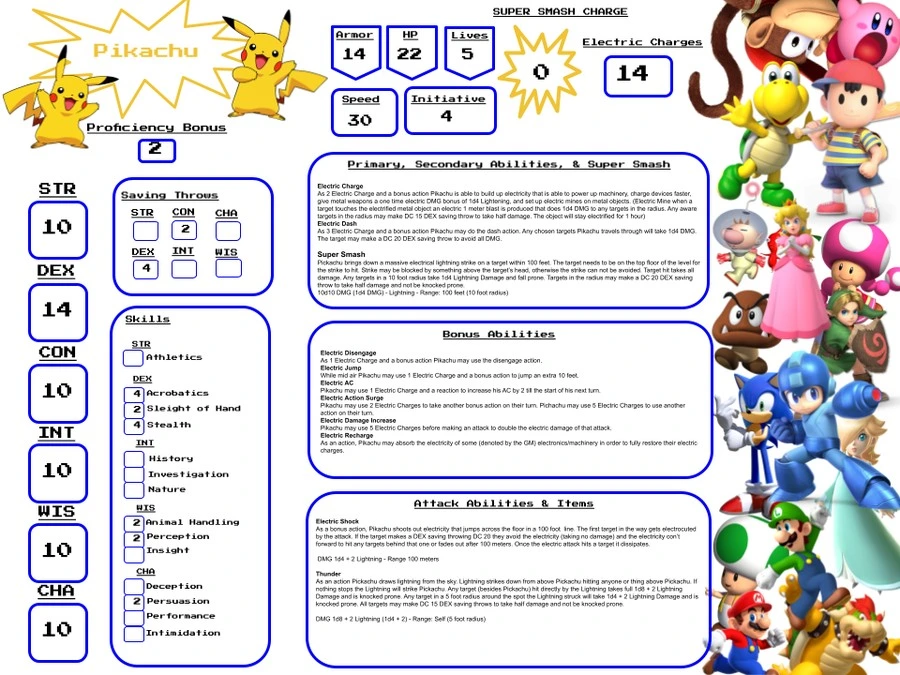
The mechanics examples show how familiar character fantasies became sheet language: jumps, copies, tools, elemental attacks, and special abilities with table-ready limits.
The sheet turns a familiar hero into stats, skills, movement, attacks, lives, and a Super Smash charge.
Character-specific sheets make the roster feel distinct while keeping everyone inside the same table structure.
Weapons, abilities, and items become readable options instead of relying on players to guess what the character should do.
Different attacks and bonuses let the crossover premise feel playful without needing separate systems for every character.
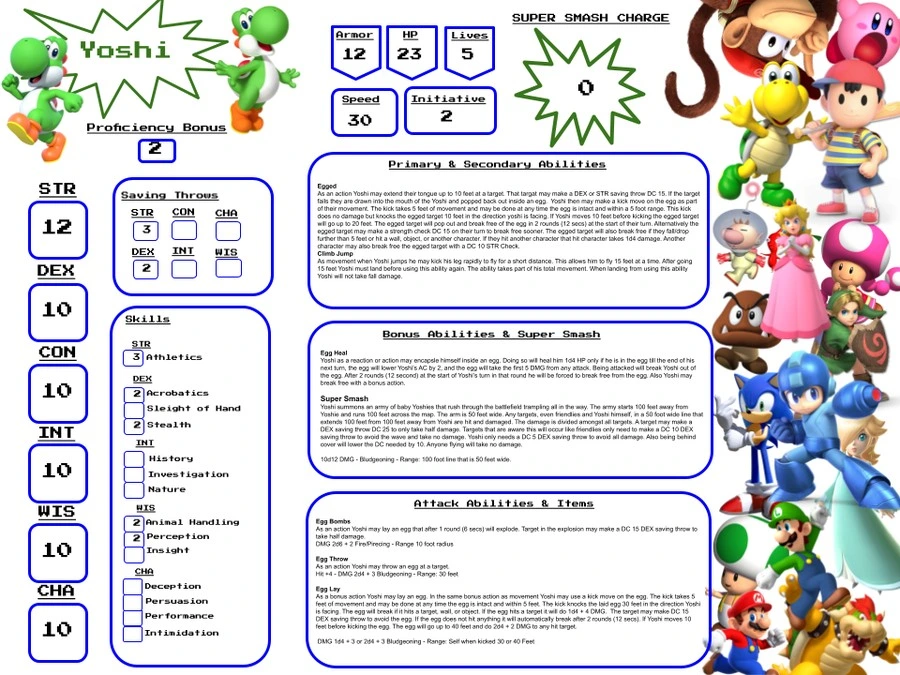
Consistent sheet structure makes different characters easier to compare, teach, and bring into play.
Return to the full project index, or compare this crossover adaptation with an original superhero RPG built from scratch.
A pre-AI fan tabletop adaptation that translated Borderlands-style gear, class choices, shops, enemies, vehicles, and downed-state heroics into runnable table procedures.
Borderlands TTRPG shows the same design habit from a different angle: take a videogame loop people understand, then build enough table structure that the GM can actually run it.
The value is in the mechanics translation. Loot tables, gear slots, downed-state action, encounter rewards, shop prep, vehicles, feats, and player inventory all connect into one table-facing system.
The original board is useful as a source map. This section translates it into text visitors can actually read.
Rules, leveling, healing, downed-state play, shields, weapons, mods, damage types, feats, classes, and backgrounds.
Loot, NPCs, equipment, vehicles, item building, feats, leveling, shops, and encounter rewards.
Player inventory, shops, weapon slots, vehicles, XP/VHP, gear effects, and reward tracking.
Procedural weapon, shield, and grenade generation so loot variety had a table procedure.
The project does not just say "give them a cool gun." It defines how loot can be generated, priced, tracked, equipped, and rewarded.
NPC sheets, shops, encounter rewards, vehicles, equipment, feats, and leveling were designed to feed the same table loop.
This is a fan tabletop adaptation and portfolio proof of system design, not an official Borderlands release or commercial product.
These are the parts of the system that mattered most at the table: how players get loot, track it, build with it, and turn it into action.
The weapon generator translated loot variety into a repeatable table process. It gave the GM knobs for rarity, manufacturer feel, weapon type, damage, reload pressure, magazine size, properties, and cost.
| Procedure | What It Controlled | Table Function |
|---|---|---|
| Manufacturer and rarity | Style, availability, and reward weight. | Makes loot feel different before the stats are even read. |
| Weapon stats | Accuracy, damage, reload or charge speed, magazine size, and damage type. | Turns a drop into a build decision instead of a name on a list. |
| Known properties | Special tags such as burst, extended capacity, reload traits, or splash behavior. | Gives the GM fast variation without writing every item by hand. |
The found-loot tracker made the high-volume reward loop manageable. Players could track weapons, backpack pressure, mod slots, HP/VHP, effects, shops, rewards, and vehicles without the GM carrying all of it in memory.
Inventories, weapon slots, gear effects, mod slots, health layers, and backpack limits.
Shop inventory, encounter rewards, enemy drops, vehicle options, and XP/VHP pacing.
The system supports frequent rewards without turning every loot moment into bookkeeping chaos.
Covered leveling, healing, Fight For Your Life, Second Chance, Badass Points, critical results, shields, armor, flesh, equipment, weapons, grenades, shield mods, class mods, artifact mods, damage types, feats, and class/background options.
Feat and class material gave players ways to shape their character beyond basic attacks, with costs and requirements tied to progression.
NPCs, shops, encounter rewards, and vehicles let the GM connect scene prep to player loot and advancement.
The story opening connected the system to scenes: vault-hunter premise, crash, town defense, skags, bandits, Dr. Zed, Fyrestone, roadblocks, and boss-gate structure.
Players enter as vault hunters with clear genre expectations.
Crash, town defense, enemies, and NPC help create immediate table momentum.
Roadblocks and boss gates translate videogame pacing into campaign structure.
Compare this loot-driven d20 adaptation with another pre-AI mechanics archive, or return to the full project index.
A pre-AI fan mechanics packet inspired by Assassin's Creed Odyssey, built around alert states, adrenaline, relic weapons, damage conditions, and staged ability upgrades.
Creed TTRPG is not actual-play evidence. It is a mechanics archive: a pre-AI attempt to rebuild stealth-action verbs as a classless tabletop system.
The project matters because it shows design range. Before AI tools were part of the workflow, Kyle was already translating videogame structure into d20 procedures, resource rules, damage conditions, and upgrade paths.
The source contact sheet works as an internal map. The public page needs the system logic in readable HTML.
A compact source packet for classless d20 progression, stealth, relics, damage conditions, and ability paths.
Oblivious, Suspicious, Investigating, Alarmed, and Chasing turn stealth into staged pressure.
Source-packet count showing how much of the design focused on staged ability growth.
Source-packet count showing the resource system was central, not a side note.
The design gives GMs intermediate pressure states before a scene becomes a chase or fight.
Baseline, Hunter, Warrior, and Assassin-style paths let characters grow by playstyle instead of fixed class identity.
This is a fan mechanics/design archive, not an official product, not actual-play proof, and not a playtested release.
This page does not ask visitors to read small text inside screenshots. The mechanics are presented directly.
The stealth system gives the GM a ladder for consequences. A failed or risky action does not have to jump straight to combat; the scene can escalate in readable stages.
NPCs have not noticed the player.
The scene has tension; NPCs have a reason to check.
NPCs actively investigate the disturbance.
NPCs know something is wrong and respond.
The stealth loop turns into pursuit or active conflict.
The upgrade tree grouped abilities by playstyle while keeping growth staged. That lets characters specialize without forcing every character into a rigid class.
General feats and character fundamentals.
Ranged, scouting, and precision pressure.
Direct conflict, melee force, and battlefield presence.
Stealth, burst action, and targeted execution.
Hit points, starting proficiencies, starting weapon and relic progression, adrenaline rules, stealth levels, NPC alert levels, damage types, buildup, and conditions.
The packet included support for Spear of Leonidas, Staff of Hermes, Shield of Madu, and other weapon or arcane-focus-style choices.
Burn, toxic, stun, paralyzing, buildup, and modified damage types gave combat and stealth fallout a rules vocabulary.
The project should be read as a mechanics archive. It shows how Kyle thinks through systems before the table starts, while staying clear that there were no playtest outcomes to claim.
Pre-AI mechanics design, classless d20 adaptation, stealth states, adrenaline, relics, conditions, and upgrade paths.
Actual play, player response, session count, playtest success, official affiliation, or commercial release.
It broadens the portfolio by showing system thinking before AI and before a campaign is launched.
Compare this mechanics archive with a loot-driven d20 adaptation, or return to the full project index.
These are player words with handle-based attribution. The StartPlaying review link is repeated here for anyone who wants the external signal too.
Kyle makes the world feel like it keeps moving even when our characters are not looking at it. I always felt like my choices mattered and that my character had a real place in the larger story.
Kyle creates the kind of table where people feel safe enough to take creative risks. He pays attention to the room and still keeps the story moving.
Kyle can handle absolute player chaos and still make it feel like part of the story. He keeps the table welcoming no matter how much experience someone has.
In Peril to Profit, every faction and place felt like it had a reason to exist. The world was huge, but I never felt lost.
I have played with Kyle across very different games. There is a huge amount behind the scenes, but at the table it still feels clear and fast.
Kyle puts a lot of invisible work into making custom systems feel smooth at the table. In Stargate, the mechanics supported the cinematic feeling instead of getting in the way.
My character felt like they mattered to the world. That is what kept me excited between sessions.
Kyle gives players room to chase what interests them, adjusts mechanics for the fun of the table, and gives creative problem-solving a fair shot.
A strong table gives people something specific to remember: the choice that landed, the scene that surprised them, and the moment they knew they belonged.
Players should leave with one scene they keep replaying, one choice that mattered, and one reason to come back.
A good room lets people try the bold voice, the messy plan, and the sincere character beat.
Players can feel the size of the setting without needing homework before they make a choice.
The table can swerve, joke, and surprise itself without losing pace or emotional payoff.
Mechanics create pressure and texture, then get out of the way when the scene needs air.
I've had the chance to play with Kyle as a Dungeon Master/Game Master across three different campaigns, including both D&D 5e and Daggerheart, and I can honestly say he brings something really special to the table.
Kyle is creative, imaginative, and deeply thoughtful in the way he builds worlds and stories. His campaigns are immersive and expansive, but they never feel like they lose sight of the players. He puts a lot of care into getting to know each character, often spending one-on-one time with players to understand what they're hoping to explore, and then finding creative homebrew ways to make those visions come alive.
One of my favorite things about his games is that his homebrews are genuinely unique. They can be funny, heartfelt, surprising, and emotionally resonant, often engaging real-world themes while still feeling fully rooted in high fantasy. His campaigns can be challenging, but in a way that feels satisfying and rewarding rather than punishing.
I also really appreciate the way Kyle approaches safety, accessibility, and community at the table. He is attentive to player comfort, open to feedback, and cares about making the game feel welcoming and collaborative. He creates space for people to participate in ways that work for them, and he helps build a table culture where players feel invested not only in the story, but in each other.
Kyle is also really intentional about making sure players have meaningful character and story moments. He pays attention to everyone at the table and looks for ways to give each character time to shine, whether that means a personal arc, a dramatic choice, a funny moment, or a homebrew feature that helps bring a player's vision to life. It makes the campaigns feel collaborative and personal, rather than like players are just moving through a story that was already written without them.
My favorite world of his is Peril to Profit, a fantasy steampunk, hyper-capitalist corporate satire with a vibe somewhere between Borderlands and Fallout's Vault-Tec. It's hilarious, sharp, weird, imaginative, and full of heart.
Kyle brings a rare mix of humor, emotional depth, creativity, flexibility, and care to his games. I'd absolutely recommend him to anyone looking for a GM who can build a memorable world, support meaningful character arcs, and create a table that feels fun, safe, and genuinely connected.

A few adjacent projects show the same habit from another angle: turning messy play, systems, notes, and worldbuilding into something other people can explore.
Tell me the room, the players, the tone, and what would make the event a win. I will help shape the first session into something clear, welcoming, and worth returning to.



 GameMasterKyle Discord
 StartPlaying
 YouTube
 TikTok
 GitHub
 Get in touch